
Spiritual, History
Thien Mu Pagoda: Where Sacred Serenity Meets the Timeless Perfume River
The Central
7 min read
"Thien Mu Pagoda, an iconic spiritual and architectural marvel of Hue, majestically reflects upon the poetic Perfume River, an unmissable destination for those seeking tranquility and a deep dive into the ancient capital's culture."
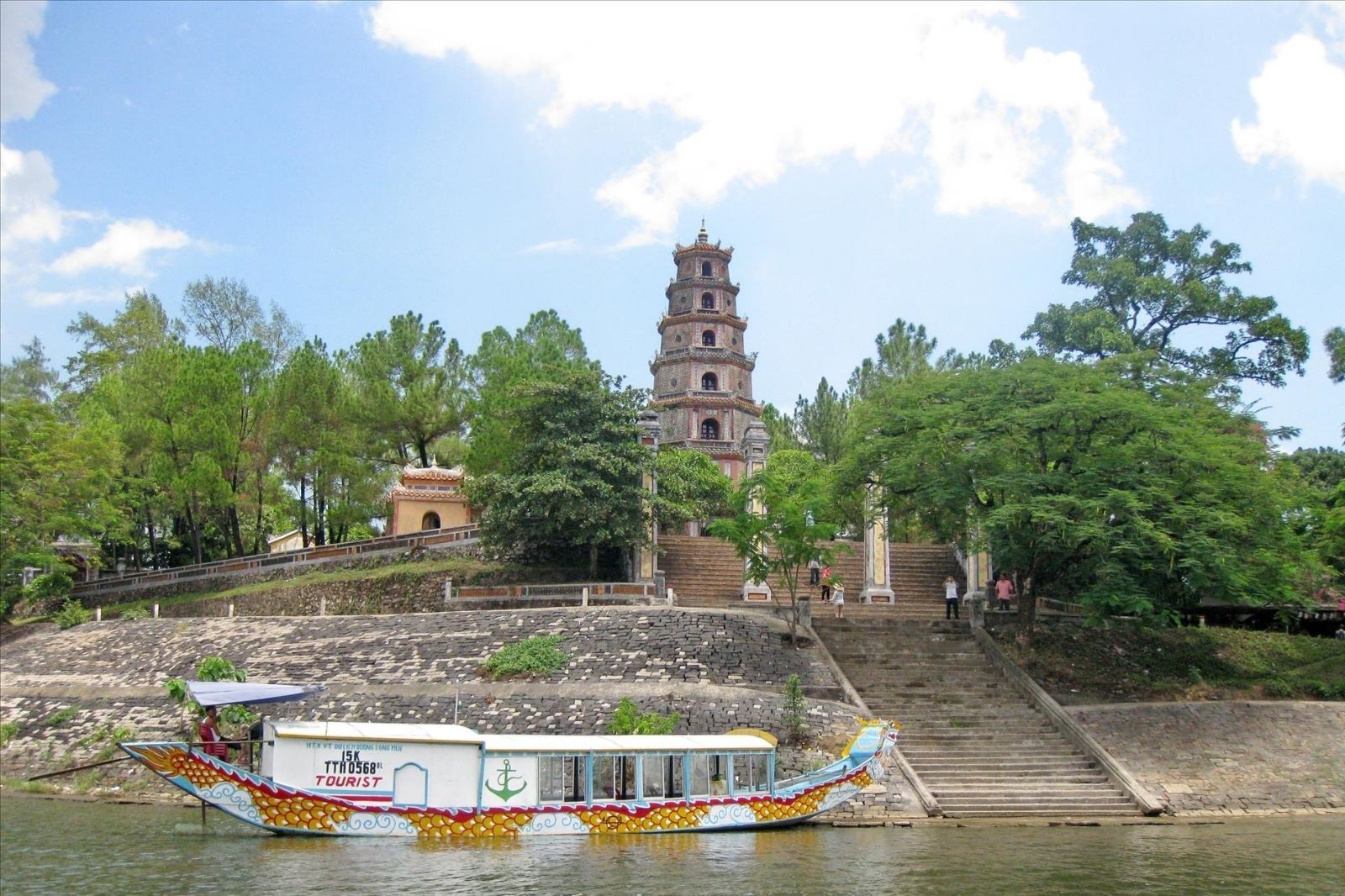
Stepping into Thien Mu Pagoda is embarking on a journey into the legendary beauty of Hue. Perched majestically on Ha Khe Hill, this ancient pagoda is more than just a scenic spot; it is the spiritual heart of a land steeped in poetry, where time seems to stand still, allowing visitors to breathe in every moment of history and find peace within their souls. Every corner, every architectural detail, tells a tale of wise rulers, sacred legends, and the magnificent harmony between humanity and nature's grandeur.
Beauty Through Every Angle
Thien Mu Pagoda, also known as Linh Mu Pagoda, stands as one of the most prominent cultural and spiritual symbols of Hue. This ancient pagoda is majestically situated on Ha Khe Hill, in Huong Long ward, Hue city, offering a poetic beauty as it reflects upon the gentle Perfume River. The pagoda attracts visitors not only with its serene charm but also with centuries of history intertwined with the ancient capital. Here, you will experience a sacred, tranquil atmosphere and valuable ancient bells, all within a wonderfully lush green compound.
Thien Mu Pagoda was built in 1601 under the reign of Lord Nguyen Hoang, closely tied to a mysterious legend. Villagers of Ha Khe recounted the story of a sacred old woman, dressed in red and green, appearing on the hill by the Perfume River, prophesying that a wise ruler would build a pagoda there to gather spiritual energy. Lord Nguyen Hoang, upon hearing this, decided to construct the pagoda and named it “Thien Mu” – meaning “Celestial Lady” – to commemorate this auspicious sign. Over centuries, this pagoda has not only been a religious structure but also a significant historical witness, renovated and expanded through many dynasties, becoming a source of pride for the people of the Ancient Capital.
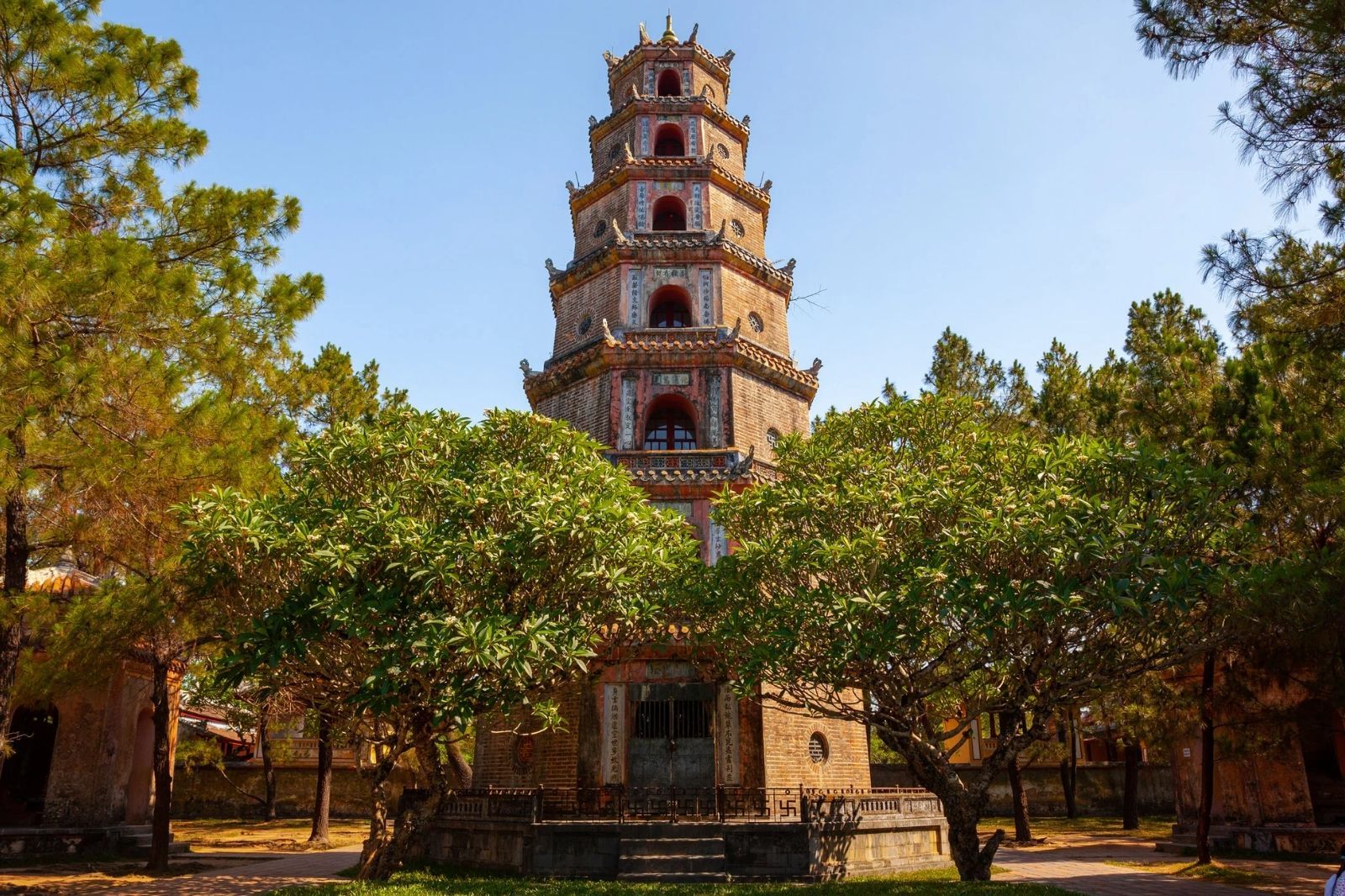
When speaking of Thien Mu Pagoda, one cannot overlook Phuoc Duyen Tower – an iconic structure that embodies the pagoda’s soul, casting its shadow upon the poetic Perfume River. The tower was built in 1844 under Emperor Thieu Tri, standing 21m tall with a unique octagonal shape and 7 tiers, symbolizing the seven stages of Buddhist enlightenment. Each tier houses a solemn Buddha statue, combining sacredness with artistic beauty. Its ancient reddish brick color, paired with traditional tiled roofs, makes Phuoc Duyen Tower rise majestically amidst the verdant landscape, creating a captivating symbol. As dusk falls, reflecting off each ancient brick, the tower resembles a torch illuminating the soul.
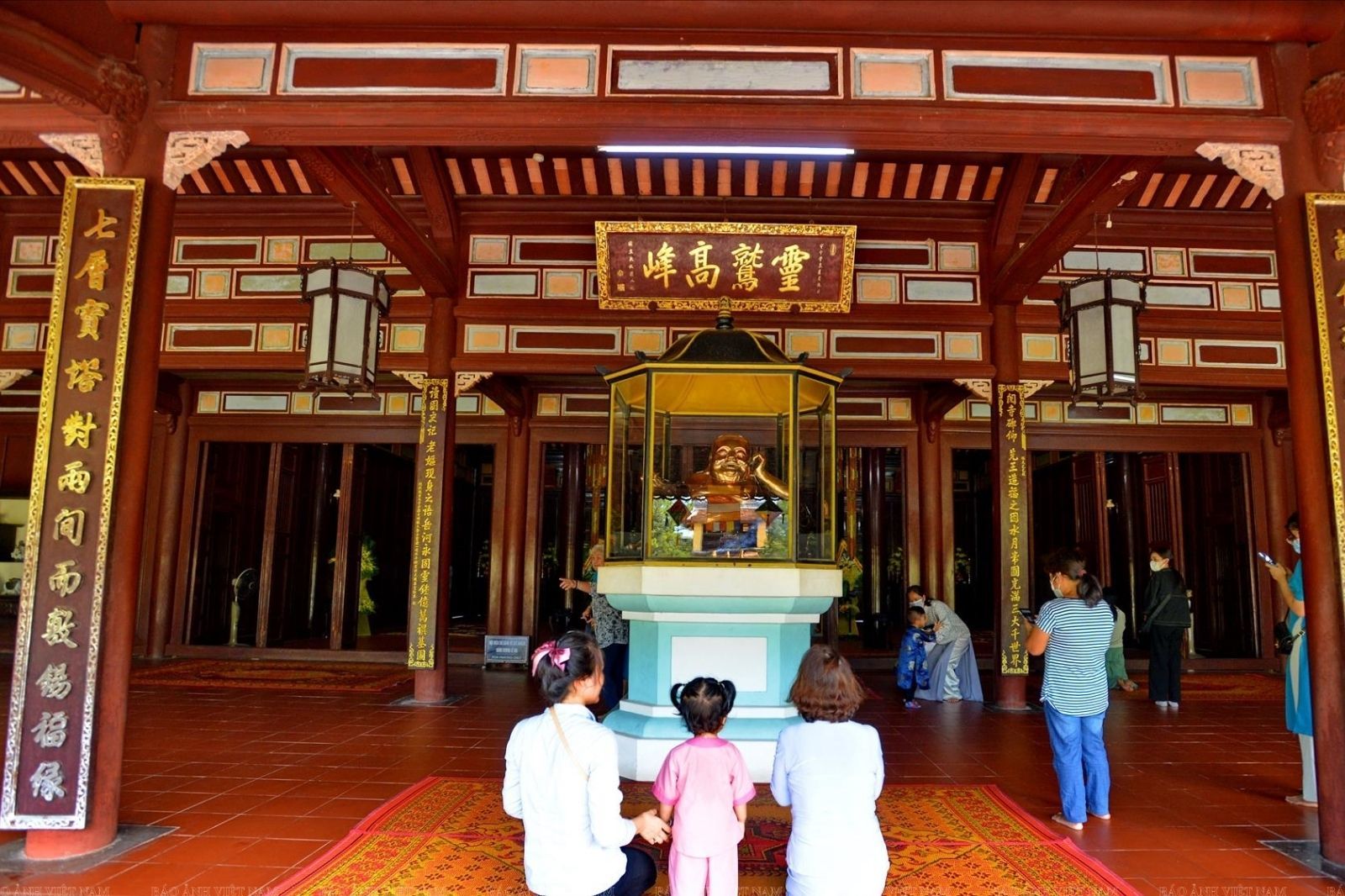
Nestled within the serene grounds of Thien Mu Pagoda are its principal spiritual structures: Dai Hung Hall and Dia Tang Hall. Dai Hung Hall is the most solemn place for worshipping Shakyamuni Buddha and various Bodhisattvas, distinguished by its gracefully curved tiled roof and an interior filled with fragrant incense and the golden glow of candles. Immediately behind it is Dia Tang Hall, dedicated to the Great Vow Bodhisattva, symbolizing boundless compassion and salvation. The architecture of these halls deeply reflects traditional Vietnamese pagoda styles, featuring grand wooden pillars of ironwood and meticulously carved horizontal panels and couplets, forming a complete and sacred architectural complex.
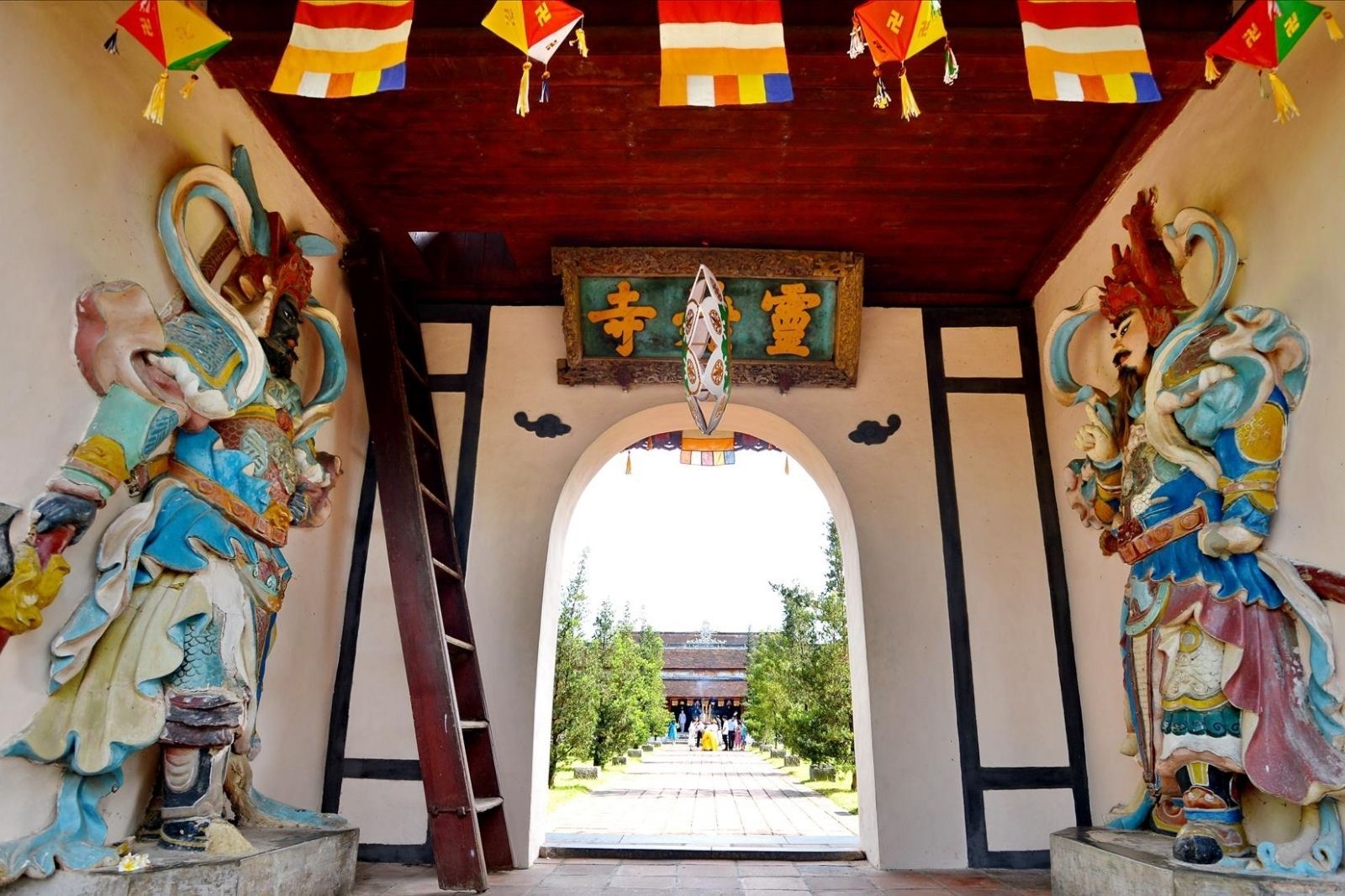
Another striking architectural feature of Thien Mu Pagoda is the Tam Quan Gate. This is not merely an entrance to the pagoda but also holds deep symbolic value in Buddhism, representing the three paths to liberation: Precepts (Giới), Concentration (Định), and Wisdom (Tuệ). The Tam Quan Gate is exquisitely carved, with traditional curved roofs and elaborate dragon and phoenix motifs, showcasing a harmonious blend of imperial and Buddhist architecture. Passing through the Tam Quan, visitors feel as if they are entering a tranquil world, completely separated from daily worries, preparing for a meaningful pilgrimage.
Thien Mu Pagoda also preserves invaluable artifacts, testaments to its rich history and artistry. Foremost among them is the Dai Hong Chung, a massive bronze bell weighing over 2 tons and standing 2.5m tall, cast in 1710 under Lord Nguyen Phuc Chu. The resonant sound of the Dai Hong Chung is likened to prayers echoing across mountains and rivers, bringing peace and tranquility. Additionally, there is the “Ngu Kien Thien Mu Tu” stele, 2.6m high and 1.25m wide, erected in 1715. This stone stele, inscribed with solemn Han characters, rests on the back of a monolithic marble tortoise, signifying sacredness and longevity. These are not merely objects tied to spiritual life but also vivid proofs of the sophisticated craftsmanship of our ancestors.
Few know that Thien Mu Pagoda is also linked to a tragic event in Vietnamese history. It was once the residence of Most Venerable Thich Quang Duc – who self-immolated in Saigon on June 11, 1963, to protest the oppression of Buddhists by the Ngo Dinh Diem regime. The grey Austin car that transported him to the site of his self-immolation is carefully preserved within the pagoda grounds as a precious historical relic. Many visitors come here not only to worship but also to reflect on his noble sacrifice and pray for peace for the nation.
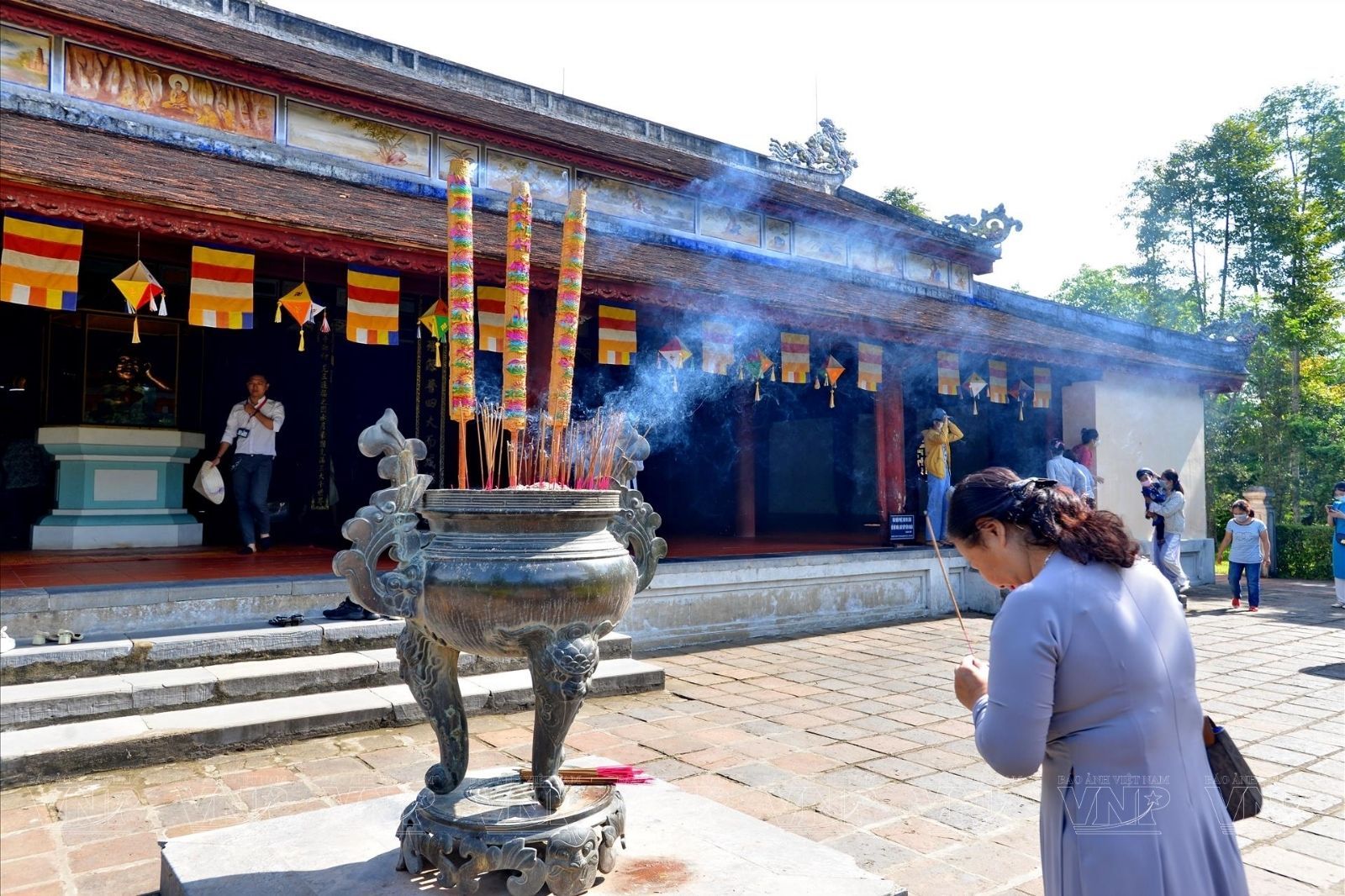
One of the most popular folk tales about Thien Mu Pagoda is the “love curse”: that couples who visit the pagoda together will break up. This makes many young couples hesitant to visit. However, researchers and the monks themselves at the pagoda confirm that this is merely a fabricated folk story, with no factual basis. This anecdote likely originated as a warning against improper behavior or abusing the sacred space for worldly matters in ancient times. Today, many couples still visit the pagoda to pray for good fortune and peace in their love.
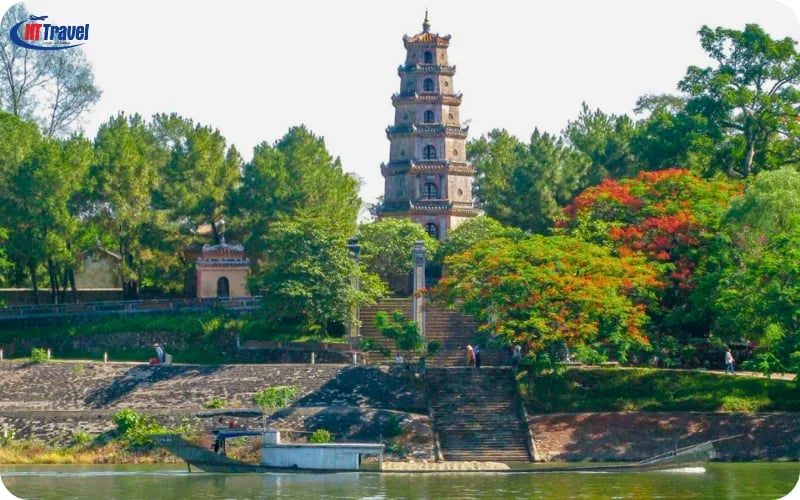
Thien Mu Pagoda stands out not only for its ancient architecture and spiritual value but also profoundly moves hearts with its wonderful harmony with nature. Perched on the lush Ha Khe Hill, with the gentle Perfume River flowing in front, the entire pagoda seems an inseparable part of Hue’s dreamy landscape. The expansive grounds, with their rows of pine trees and shady green gardens, create a sense of tranquility, separating it from the bustle of the city. Among these, the stupa garden – the resting place of many high monks who once presided over the pagoda, especially the late Most Venerable Thich Don Hau – is also a serene stop, offering an ancient, moss-covered beauty beneath the verdant canopy.
To reach Thien Mu Pagoda, in addition to land transport, visitors should not miss the unique and characteristic Hue experience: a dragon boat ride on the Perfume River. From Toa Kham or Nguyen Hoang wharf, you will leisurely admire the scenery along both banks of the Perfume River, feel the cool breeze, and listen to Hue folk songs and melodies (if the service is booked). This journey not only takes you to the pagoda but is also an essential part of fully experiencing the romantic, poetic beauty of Hue, before stepping into the tranquil space of Thien Mu Pagoda.
After visiting Thien Mu Pagoda, do not miss the opportunity to explore other fascinating nearby attractions to enrich your imperial city journey. Places such as Hue Imperial City (Dai Noi), Tu Duc Tomb, Vong Canh Hill, Thuy Xuan Incense Village, or Dong Ba Market are all within close proximity, easy to reach, and offer diverse experiences of history, culture, cuisine, and local life. Each destination will tell its own story, contributing to a complete picture of a Hue that is ancient yet romantic, and vibrant.
Essential Information
Best Time
January to April: Spring brings cool, pleasant weather and lush greenery, ideal for sightseeing and spiritual visits.
May to August: Summer offers beautiful sunshine, allowing you to admire the vibrant red phoenix flowers along the poetic Perfume River, perfect for exploring and photography.
Early mornings (8:00 AM – 10:00 AM): The air is fresh and cool, allowing you to fully appreciate the pagoda's serenity and witness the morning sun illuminating Phuoc Duyen Tower.
Late afternoons (4:00 PM – 6:00 PM): The late afternoon sun casts a golden glow across the sky, reflecting the pagoda's silhouette on the river, creating a romantic scene ideal for stunning photos.
May to August: Summer offers beautiful sunshine, allowing you to admire the vibrant red phoenix flowers along the poetic Perfume River, perfect for exploring and photography.
Early mornings (8:00 AM – 10:00 AM): The air is fresh and cool, allowing you to fully appreciate the pagoda's serenity and witness the morning sun illuminating Phuoc Duyen Tower.
Late afternoons (4:00 PM – 6:00 PM): The late afternoon sun casts a golden glow across the sky, reflecting the pagoda's silhouette on the river, creating a romantic scene ideal for stunning photos.
Transportation
Motorbike or private car: From Hue city center (near Truong Tien Bridge, Nguyen Dinh Chieu walking street), drive along Le Loi Street, then straight to Kim Long Street. From there, continue for about 3–4km along the riverside road to reach Thien Mu Pagoda's gate. The journey takes approximately 10–15 minutes.
Taxi or ride-hailing services: A quick and convenient option. Simply enter “Chua Thien Mu” into the app, and the vehicle will take you directly there. Fares for a motorbike taxi are around 40,000–60,000 VND, while a regular taxi costs about 70,000–100,000 VND, depending on your starting location.
Dragon boat on the Perfume River: A unique and authentic Hue experience involves taking a dragon boat from Toa Kham or Nguyen Hoang wharf. Visitors will have the opportunity to admire the scenery along both banks of the Perfume River and listen to Hue folk music (if the service is booked). Boat rental prices range from 100,000–150,000 VND per person.
Taxi or ride-hailing services: A quick and convenient option. Simply enter “Chua Thien Mu” into the app, and the vehicle will take you directly there. Fares for a motorbike taxi are around 40,000–60,000 VND, while a regular taxi costs about 70,000–100,000 VND, depending on your starting location.
Dragon boat on the Perfume River: A unique and authentic Hue experience involves taking a dragon boat from Toa Kham or Nguyen Hoang wharf. Visitors will have the opportunity to admire the scenery along both banks of the Perfume River and listen to Hue folk music (if the service is booked). Boat rental prices range from 100,000–150,000 VND per person.
Tips
Dress modestly: When visiting the pagoda, it is advisable to wear respectful, conservative clothing to show reverence for the sacred place.
Maintain order and solemnity: Avoid loud conversations, pushing, or causing disturbances. If you wish to offer incense or pray, please follow the instructions.
Conscious photography: You may capture beautiful moments, but please remember to turn off flash and refrain from taking photos in prohibited areas or during ceremonies.
Keep the environment clean: Please dispose of trash in designated bins to avoid affecting the pagoda's environment and aesthetics.
Do not touch statues or altars: Buddha statues and altars hold spiritual and historical value; physical contact should be avoided.
The “love curse” legend: This is merely a folk tale and has no factual basis. Don't worry if you visit with your partner.
Maintain order and solemnity: Avoid loud conversations, pushing, or causing disturbances. If you wish to offer incense or pray, please follow the instructions.
Conscious photography: You may capture beautiful moments, but please remember to turn off flash and refrain from taking photos in prohibited areas or during ceremonies.
Keep the environment clean: Please dispose of trash in designated bins to avoid affecting the pagoda's environment and aesthetics.
Do not touch statues or altars: Buddha statues and altars hold spiritual and historical value; physical contact should be avoided.
The “love curse” legend: This is merely a folk tale and has no factual basis. Don't worry if you visit with your partner.

Related Destinations



Essential Information
Best Time
January to April: Spring brings cool, pleasant weather and lush greenery, ideal for sightseeing and spiritual visits.
May to August: Summer offers beautiful sunshine, allowing you to admire the vibrant red phoenix flowers along the poetic Perfume River, perfect for exploring and photography.
Early mornings (8:00 AM – 10:00 AM): The air is fresh and cool, allowing you to fully appreciate the pagoda's serenity and witness the morning sun illuminating Phuoc Duyen Tower.
Late afternoons (4:00 PM – 6:00 PM): The late afternoon sun casts a golden glow across the sky, reflecting the pagoda's silhouette on the river, creating a romantic scene ideal for stunning photos.
May to August: Summer offers beautiful sunshine, allowing you to admire the vibrant red phoenix flowers along the poetic Perfume River, perfect for exploring and photography.
Early mornings (8:00 AM – 10:00 AM): The air is fresh and cool, allowing you to fully appreciate the pagoda's serenity and witness the morning sun illuminating Phuoc Duyen Tower.
Late afternoons (4:00 PM – 6:00 PM): The late afternoon sun casts a golden glow across the sky, reflecting the pagoda's silhouette on the river, creating a romantic scene ideal for stunning photos.
Transportation
Motorbike or private car: From Hue city center (near Truong Tien Bridge, Nguyen Dinh Chieu walking street), drive along Le Loi Street, then straight to Kim Long Street. From there, continue for about 3–4km along the riverside road to reach Thien Mu Pagoda's gate. The journey takes approximately 10–15 minutes.
Taxi or ride-hailing services: A quick and convenient option. Simply enter “Chua Thien Mu” into the app, and the vehicle will take you directly there. Fares for a motorbike taxi are around 40,000–60,000 VND, while a regular taxi costs about 70,000–100,000 VND, depending on your starting location.
Dragon boat on the Perfume River: A unique and authentic Hue experience involves taking a dragon boat from Toa Kham or Nguyen Hoang wharf. Visitors will have the opportunity to admire the scenery along both banks of the Perfume River and listen to Hue folk music (if the service is booked). Boat rental prices range from 100,000–150,000 VND per person.
Taxi or ride-hailing services: A quick and convenient option. Simply enter “Chua Thien Mu” into the app, and the vehicle will take you directly there. Fares for a motorbike taxi are around 40,000–60,000 VND, while a regular taxi costs about 70,000–100,000 VND, depending on your starting location.
Dragon boat on the Perfume River: A unique and authentic Hue experience involves taking a dragon boat from Toa Kham or Nguyen Hoang wharf. Visitors will have the opportunity to admire the scenery along both banks of the Perfume River and listen to Hue folk music (if the service is booked). Boat rental prices range from 100,000–150,000 VND per person.
Tips
Dress modestly: When visiting the pagoda, it is advisable to wear respectful, conservative clothing to show reverence for the sacred place.
Maintain order and solemnity: Avoid loud conversations, pushing, or causing disturbances. If you wish to offer incense or pray, please follow the instructions.
Conscious photography: You may capture beautiful moments, but please remember to turn off flash and refrain from taking photos in prohibited areas or during ceremonies.
Keep the environment clean: Please dispose of trash in designated bins to avoid affecting the pagoda's environment and aesthetics.
Do not touch statues or altars: Buddha statues and altars hold spiritual and historical value; physical contact should be avoided.
The “love curse” legend: This is merely a folk tale and has no factual basis. Don't worry if you visit with your partner.
Maintain order and solemnity: Avoid loud conversations, pushing, or causing disturbances. If you wish to offer incense or pray, please follow the instructions.
Conscious photography: You may capture beautiful moments, but please remember to turn off flash and refrain from taking photos in prohibited areas or during ceremonies.
Keep the environment clean: Please dispose of trash in designated bins to avoid affecting the pagoda's environment and aesthetics.
Do not touch statues or altars: Buddha statues and altars hold spiritual and historical value; physical contact should be avoided.
The “love curse” legend: This is merely a folk tale and has no factual basis. Don't worry if you visit with your partner.