Vietnam Canvas
Hero Image
History, Spiritual

My Son Sanctuary: Where Time Stands Still and the Champa Soul Awakens

The Central
6 min read

"Step into My Son Sanctuary, and you'll wander into an ancient kingdom of the legendary Champa civilization, where moss-covered temple towers narrate tales of a glorious past, immersed in unique architectural beauty and sacred spiritual space."

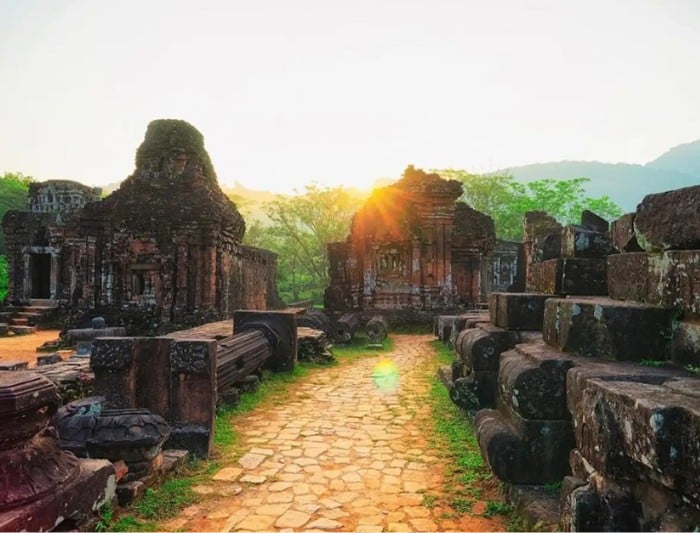
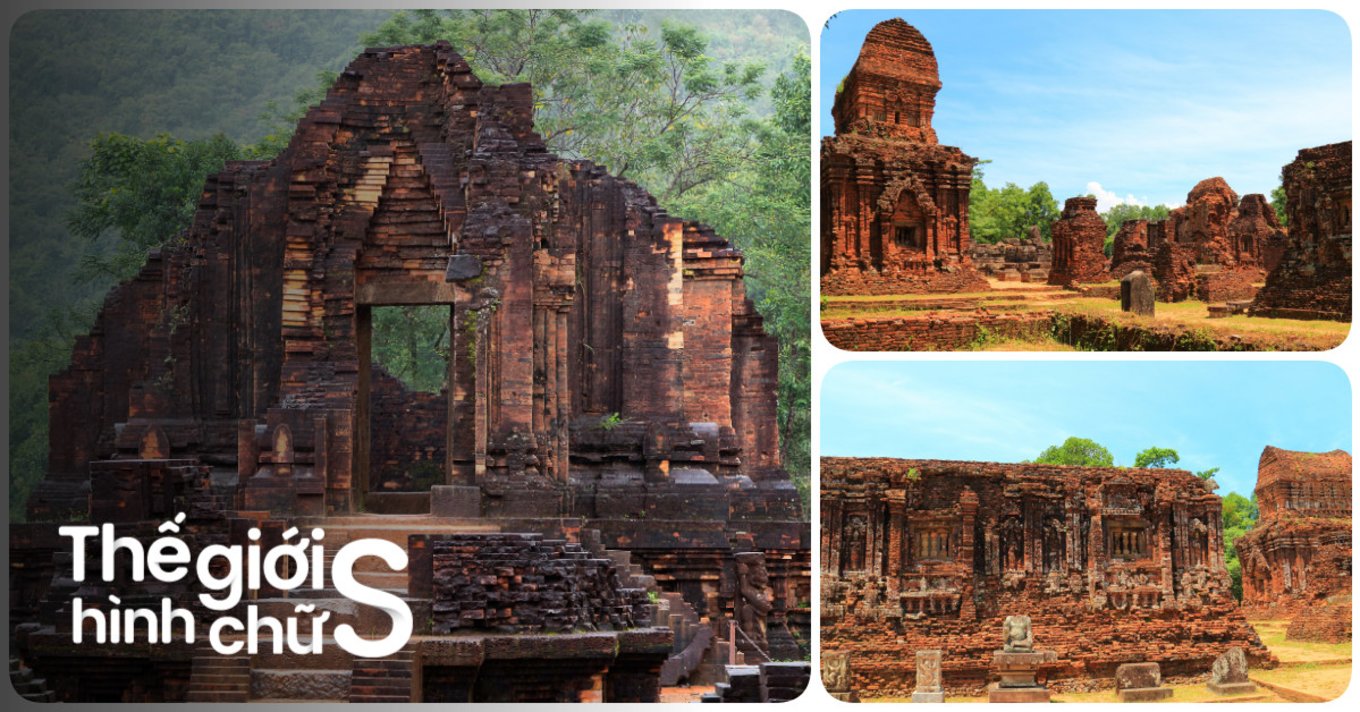
Nestled in the lush green valley of Quảng Nam, My Son Sanctuary emerges like an ancient dream, where weathered red brick temples stand tall, whispering stories of a vibrant civilization that once reigned. This is not merely an archaeological site, but an endless epic of art, faith, and the resilience of the Champa kingdom. Every stone, every carved detail holds a soul, inviting travelers to discover its wonders and feel the profound intertwining of humanity and the divine. Visiting My Son means not only admiring a heritage site but also touching the depths of history, feeling the pulse of a golden culture that has etched its eternal mark on the heart of Vietnam.

Beauty Through Every Angle
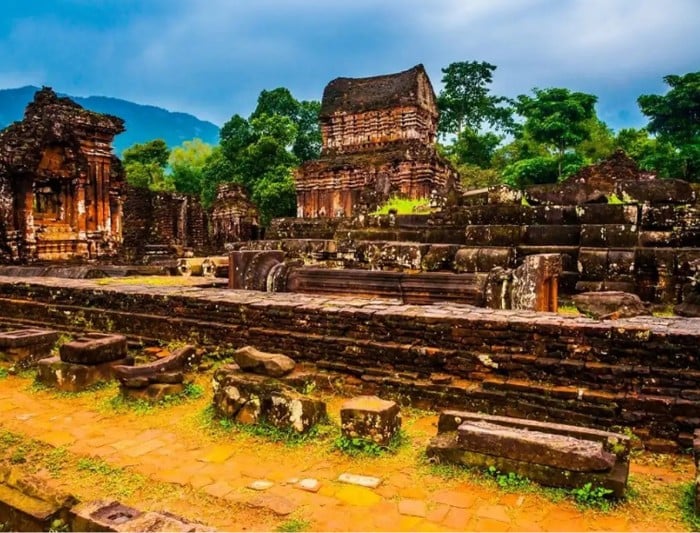
Hidden in a lush valley in Duy Phu Commune, Duy Xuyen District, Quang Nam Province, My Son Sanctuary...
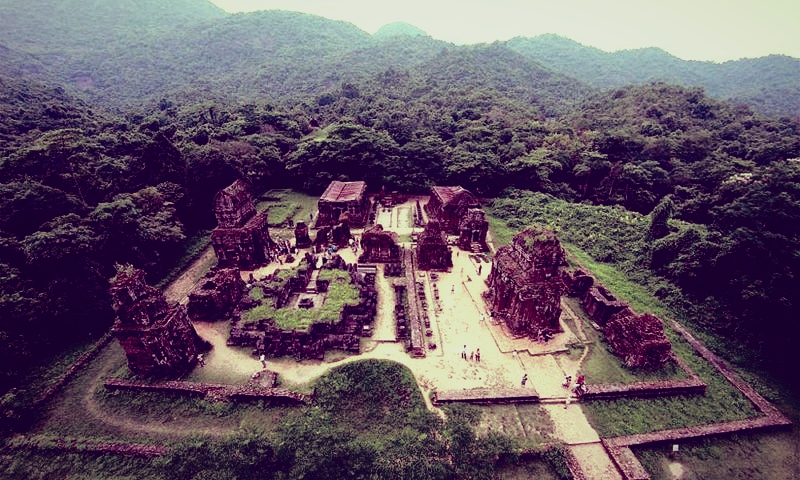
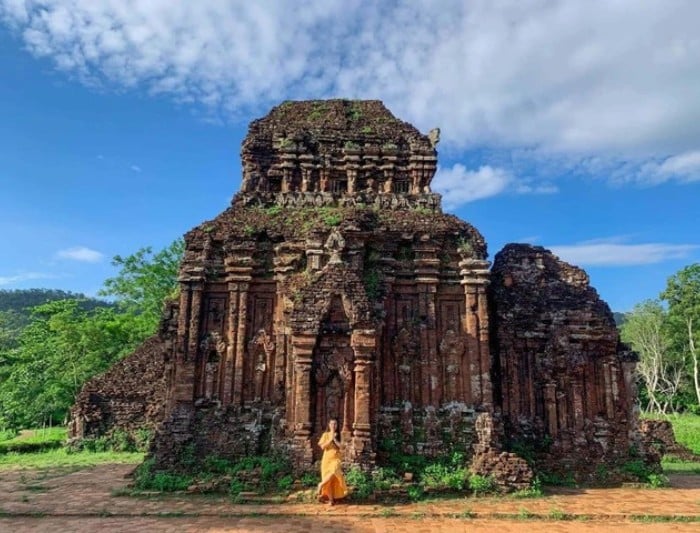
Hidden in a lush valley in Duy Phu Commune, Duy Xuyen District, Quang Nam Province, My Son Sanctuary is not just an ancient architectural complex but a magnet for all souls who love history and exploration. Recognized by UNESCO as a World Cultural Heritage Site in 1999, My Son stands as a vibrant testament to the vanished Champa civilization, a renowned Hindu temple complex across Southeast Asia, comparable to Cambodia's Angkor Wat or Indonesia's Borobudur. Here, visitors can admire the unique and mysterious beauty of nearly 70 brick and stone temple towers, imbued with the breath of time and legendary stories.
The history of My Son Sanctuary begins in the 4th century under King Bhadravarman I, who laid the fo...
The history of My Son Sanctuary begins in the 4th century under King Bhadravarman I, who laid the foundation for a sanctuary dedicated to Linga and the supreme god Shiva. This was where ancient Champa kings held sacred religious festivals and performed important purification rituals. Over centuries, subsequent dynasties continuously renovated and built new temple towers, transforming My Son into the cultural and religious center of the kingdom, as well as the burial site for powerful kings and priests. The ancient Sanskrit and Champa inscriptions that remain are vivid evidence of a golden age of this civilization.
After many historical upheavals and devastating wars, especially the end of the Champa kingdom in 14...
After many historical upheavals and devastating wars, especially the end of the Champa kingdom in 1470, My Son Sanctuary gradually fell into oblivion, deeply submerged in the wild jungle. It was not until 1889 that a group of French explorers led by MC Paris rediscovered this temple complex, lifting the veil of mystery after centuries. Although severely damaged by war, from over 70 original structures, only about 32 remained by 1975, with 20 relatively intact. The resilience of these ruins has allowed My Son to transcend time, becoming a precious heritage site for humanity.
My Son's architecture is deeply influenced by Indian Hinduism, evident in every red brick and sandst...
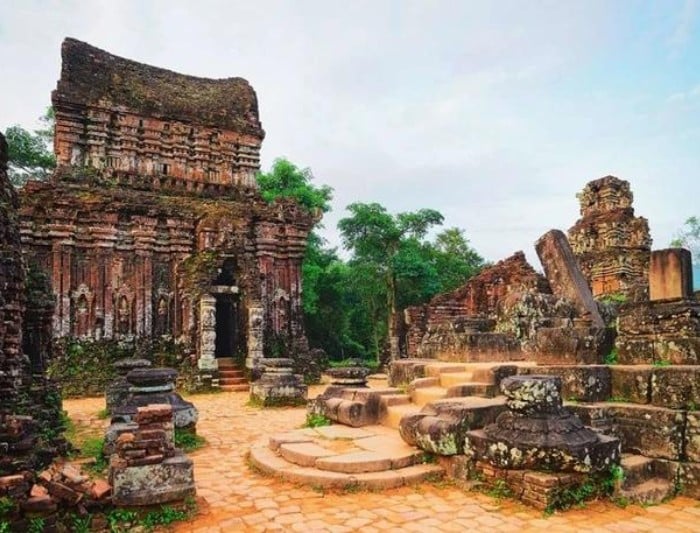
My Son's architecture is deeply influenced by Indian Hinduism, evident in every red brick and sandstone. What makes My Son unique is the Champa people's distinctive construction technique, which remains an unsolved mystery regarding the binding materials, brick firing methods, and mortar-less construction. Each temple tower typically has a pyramidal shape, divided into three parts: the pedestal, the body, and the spire, each carrying its own symbolic meaning. This was a place to worship Linga, Shiva, and other supreme deities in the Hindu faith, along with intricately carved figures of Apsara dancers, animals, and Champa kings.
For ease of study and visitation, archaeologists have divided My Son Sanctuary into 10 main groups, ...
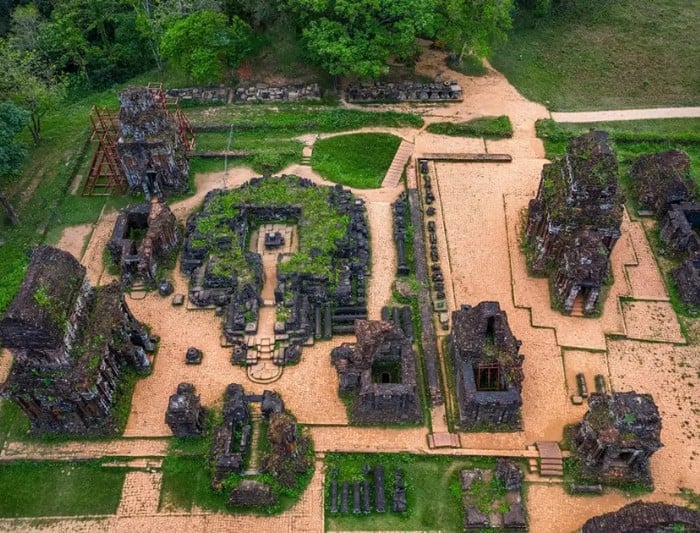
For ease of study and visitation, archaeologists have divided My Son Sanctuary into 10 main groups, named from A to K. Among these, the A, B, C, and D clusters are the most prominent and attractive areas. Groups A and A' are known as the temple-pagoda complex with 19 relics, including temple A1, hailed as an architectural masterpiece of Champa heritage. Groups B, C, D possess their own majestic beauty, clearly demonstrating reverence for Linga and Shiva, the protectors of the ancient Champa kings. Exploring each cluster offers a sense of flipping through the golden pages of a bygone kingdom's history.
The intricate bas-reliefs on the temple walls, the statues of Hindu gods and goddesses, the graceful...
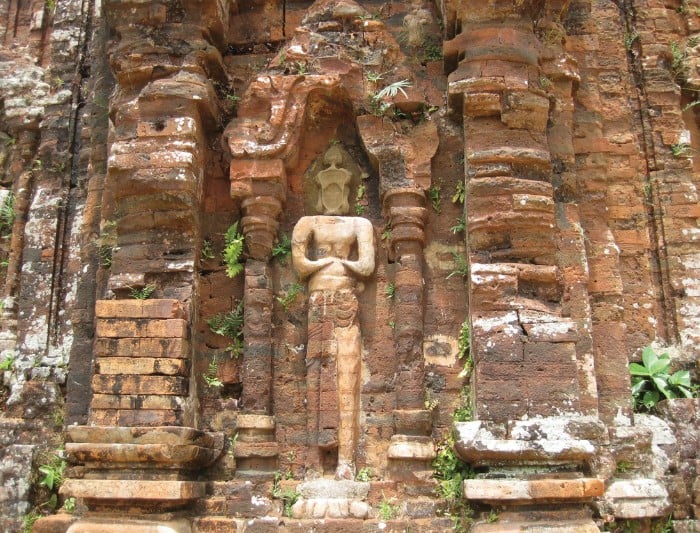
The intricate bas-reliefs on the temple walls, the statues of Hindu gods and goddesses, the graceful Apsara dancers, and familiar symbols like the lotus, Naga serpent god, and sacred flame all bear the profound imprint of Hinduism in Champa architecture and art. Furthermore, ancient steles found at My Son, inscribed in Sanskrit or Champa, not only record the establishment and expansion of the temples but also serve as invaluable documents helping future generations understand the sanctuary's history and territorial growth. These are the whispers of stone, recounting the story of a once-glorious civilization.
One of the most fascinating aspects of My Son is the presence of five temple clusters whose main ent...
One of the most fascinating aspects of My Son is the presence of five temple clusters whose main entrances do not face due East, as was customary for the Champa people, but instead are tilted towards the southeast. Archaeologists have deciphered this mystery, suggesting the cause is the activity of sinistral strike-slip faults deep within the earth. Geological shifts over thousands of years caused the land blocks and the structures built upon them to rotate, creating a unique phenomenon that demonstrates the powerful influence of natural elements on ancient architecture.
During the restoration and preservation of the temple towers, an Indian expert coincidentally discov...
During the restoration and preservation of the temple towers, an Indian expert coincidentally discovered a unique ancient road. This path, hidden deep underground, is 8 meters wide and enclosed by two parallel walls, about 1 meter deep. Notably, this road was constructed from special terracotta materials combined with unique binding agents, and it was exclusively reserved for the royal family's movement. This significant discovery sheds more light on the lifestyle and sophisticated planning of the ancient Champa kingdom.
At My Son, visitors not only admire the architecture but also experience the Champa cultural atmosph...
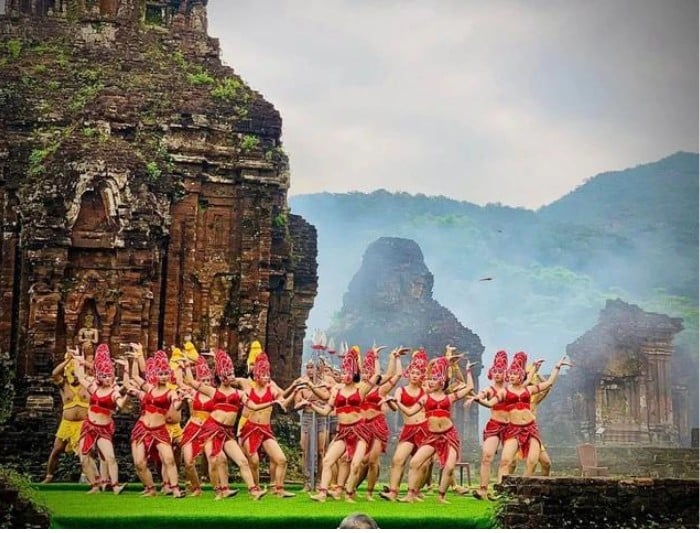
At My Son, visitors not only admire the architecture but also experience the Champa cultural atmosphere through the enchanting Apsara dance. These graceful and intricate dances are re-enacted based on inspiration from ancient Apsara stone statues and sandstone sculptures. Champa girls in shimmering costumes, accompanied by the rhythmic Paranưng drums and haunting Saranai flutes, create a mysterious and captivating ambiance, transporting visitors back to the golden age of the Champa kings.
If you happen to visit My Son in the 7th lunar month each year, you'll be fortunate to immerse yours...
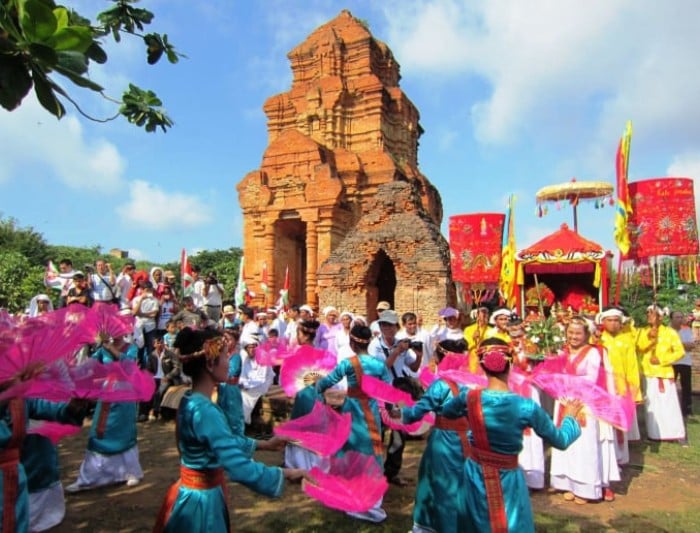
If you happen to visit My Son in the 7th lunar month each year, you'll be fortunate to immerse yourself in the Katê Festival – a profoundly important and sacred traditional festival of the Champa people. This festival is not only an occasion to commemorate ancestors and pray for fertility but also a symbol of unity and solidarity within the community. Participating in the water procession, peace prayers, palanquin processions, and other special performances will be an unforgettable cultural experience.
With its ancient, majestic, and mysterious beauty, My Son Sanctuary is a "paradise for Instagrammabl...
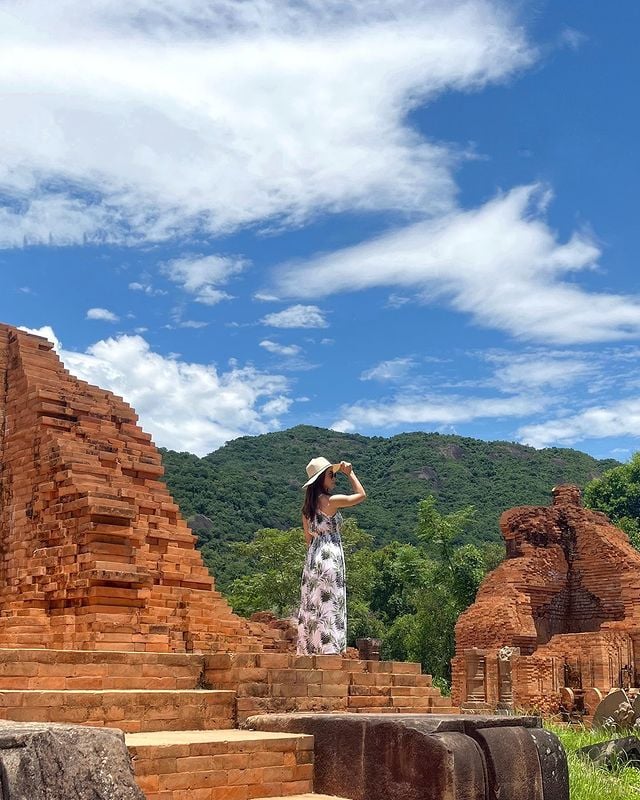
With its ancient, majestic, and mysterious beauty, My Son Sanctuary is a "paradise for Instagrammable photos" for photography enthusiasts. Standing at any angle within the relic complex, you can easily capture "thousand-like" photos for social media. Especially, try donning traditional Champa costumes, vibrant and exquisite, to create "once-in-a-lifetime" photo sets, capturing your immersion in this fairy-tale space.
The journey to explore My Son will be even more complete when you treat your palate to the renowned ...
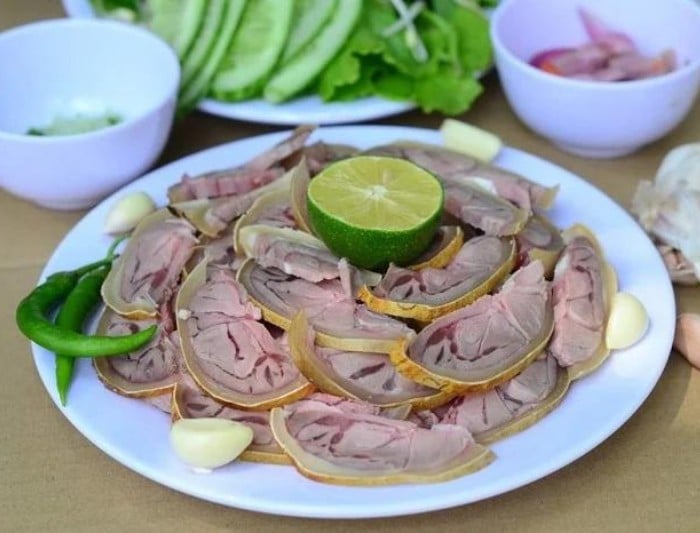
The journey to explore My Son will be even more complete when you treat your palate to the renowned specialties of Quang Nam. The Cau Mong Grilled Veal (Bê Thui Cầu Mống), with fresh veal grilled over charcoal, crispy skin, sweet tender meat, served with a special fish sauce, will be an unforgettable culinary delight. Or a bowl of Phu Chiem Quang Noodles (Mì Quảng Phú Chiêm), rich with the flavors of shrimp and pork belly, soft noodles, served with fresh herbs and crispy rice crackers, will be a wonderful gastronomic experience. Don't forget to try other local cakes like bánh đập, bánh bèo, bánh xèo, bánh tổ… which carry the authentic taste of the homeland.

Essential Information

Best Time
Dry Season (February - August): The ideal time to visit, especially from February to April.
After Tet (Lunar New Year), the sun is not too harsh, and the weather is pleasantly cool, perfect for photography.
Avoid the Rainy Season (September - December): Roads can become muddy, wet, and slippery, making travel and the overall experience challenging.
Transportation
From Da Nang (60-70km):
Bus Route 06: Runs from Da Nang Central Bus Station to My Son. Frequency is 30 minutes per trip (5:30 AM - 5:00 PM). Fares range from 8,000 - 30,000 VND.
Motorbike: Offers flexibility in time, the journey is about 70km. Rental costs are typically 100,000 - 150,000 VND/day.
Taxi or Private Car Rental: Fast and convenient, especially for groups or families. Taxi fares are approximately 400,000 - 500,000 VND/one-way.
Group Tours: Often include transfers, offering a cost-effective and hassle-free option.

From Hoi An (40-45km):
Travel along Hùng Vương street, then turn onto National Highway 1A to reach My Son.
Similarly, motorbikes, taxis, or organized tours from Hoi An are available.
Tips
Opening Hours: My Son Sanctuary is open from 6:00 AM to 5:00 PM daily, including public holidays.
Entrance Fees: Discounts are available for students; remember to bring your student ID or other identification for verification.
Respect Sacred Values: As a religious site, visitors are kindly requested to refrain from excessive incense burning or elaborate offerings.
Food and Shopping: There are very few shops or restaurants within the sanctuary area, so it's advisable to bring snacks or plan to dine in nearby towns.
Hire a Tour Guide: To gain a deeper understanding of the rich history and intricate Champa architecture, hiring a knowledgeable guide is highly recommended.
Attire: Wear comfortable, breathable clothing. However, please dress respectfully and modestly, as this is a spiritual site.
Cultural Performances: Shows are held at specific times (typically four slots per day); check the schedule upon arrival to ensure you don't miss these unique traditional dances.