Vietnam Canvas
Hero Image
History, Culture

Van Mieu - Quoc Tu Giam: The Soul of Thang Long's Millennial Legacy

The North
6 min read

"Van Mieu - Quoc Tu Giam, the intellectual heart of Hanoi, stands as Vietnam's first national university and an eternal symbol of the nation's reverence for learning. It cradles invaluable cultural, historical, and educational values, inviting travelers to immerse themselves in a thousand-year-old civilization."

In the vibrant embrace of Hanoi, a city steeped in a thousand years of history, Van Mieu - Quoc Tu Giam stands as a silent witness, a living testament to Vietnam's profound thirst for knowledge and respect for talent. Established in the 11th century, it is not merely Vietnam's first national university, but also a sacred sanctuary dedicated to Confucius, revered scholars, and the visionary kings who laid the groundwork for the nation's education. Stepping through its majestic Triple Gate, visitors are transported into a serene, ancient realm where every brick and every curved roof tile whispers tales of a brilliant civilization. From the stately Khue Van Cac pavilion reflecting in the Well of Heavenly Clarity, to the rows of stone stelae inscribed with the names of illustrious Doctors, Van Mieu - Quoc Tu Giam transcends being just a relic; it is a vivid lesson in the history, culture, and enduring spirit of learning that defines the Vietnamese people. Join Vietnam Canvas on this inspiring journey to the wellspring of Vietnamese intellect.

Beauty Through Every Angle
Van Mieu - Quoc Tu Giam is not merely an ancient architectural complex, but a vibrant symbol of Vietnam's intellect and enduring spirit of learning. Majestically situated in the heart of Hanoi, this special national relic has stood for over a millennium, witnessing countless ups and downs of the nation, and becoming an unmissable destination for anyone seeking to understand the brilliant civilization of the Vietnamese people.
The journey of Van Mieu - Quoc Tu Giam began in 1070 under the reign of King Ly Thanh Tong, when a small temple was built to worship Confucius and the Four Co-ordained. Just six years later, in 1076, King Ly Nhan Tong established Quoc Tu Giam right next to it, opening a glorious chapter for Vietnamese education as the first national university, initially exclusively for the children of royalty and high-ranking officials. This laid a solid foundation for a proud tradition of valuing education.
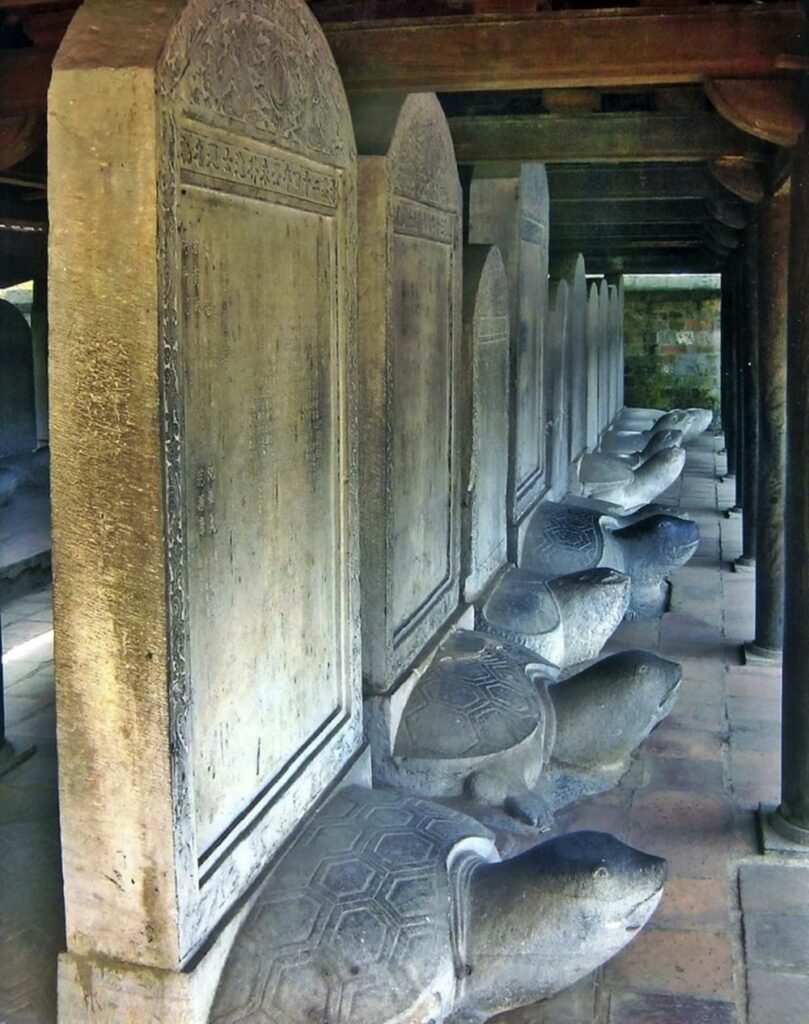
Throughout successive dynasties, particularly under King Tran Thai Tong, Quoc Tu Giam (renamed Quoc Hoc Vien) began opening its doors to talented commoners from humble backgrounds. During the reign of King Le Thanh Tong, a historic decision was made: to erect stelae honoring those who passed the doctoral examinations, celebrating intellect and encouraging national talent. Each stele is not just a list, but an epic poem of effort and achievement.
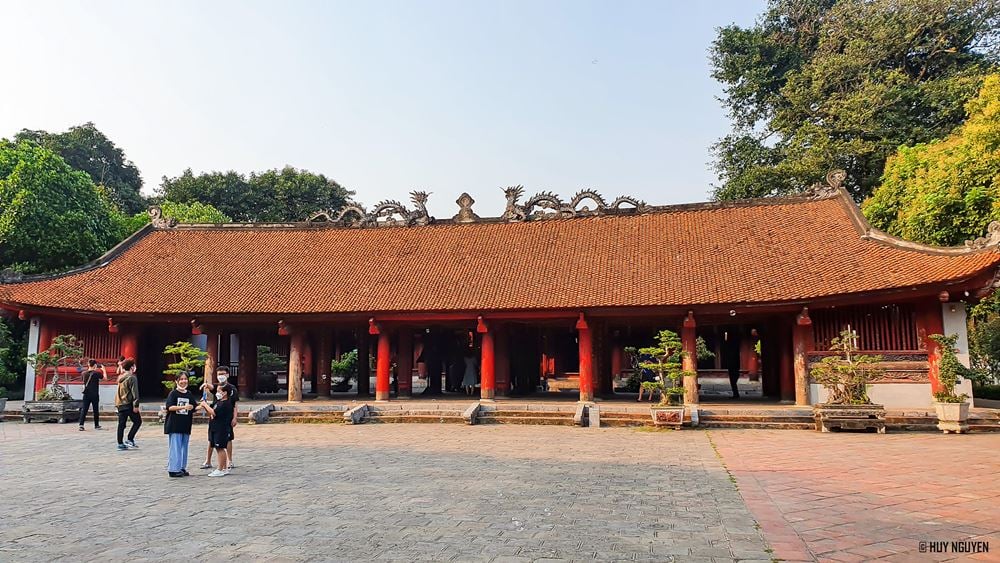
The expansive Van Mieu - Quoc Tu Giam complex, covering 54,331 m², is divided into five distinct courtyards, each bearing its own architectural significance and meaning. From the majestic Triple Gate to the final Thai Hoc House, every step is a journey through space and time, discovering the depth of traditional Vietnamese architecture, deeply influenced by the Later Le dynasty style with its curved tiled roofs and exquisite carved details.
The triple-gated Van Mieu Mon is the first point of entry, greeting visitors with its ancient and so...
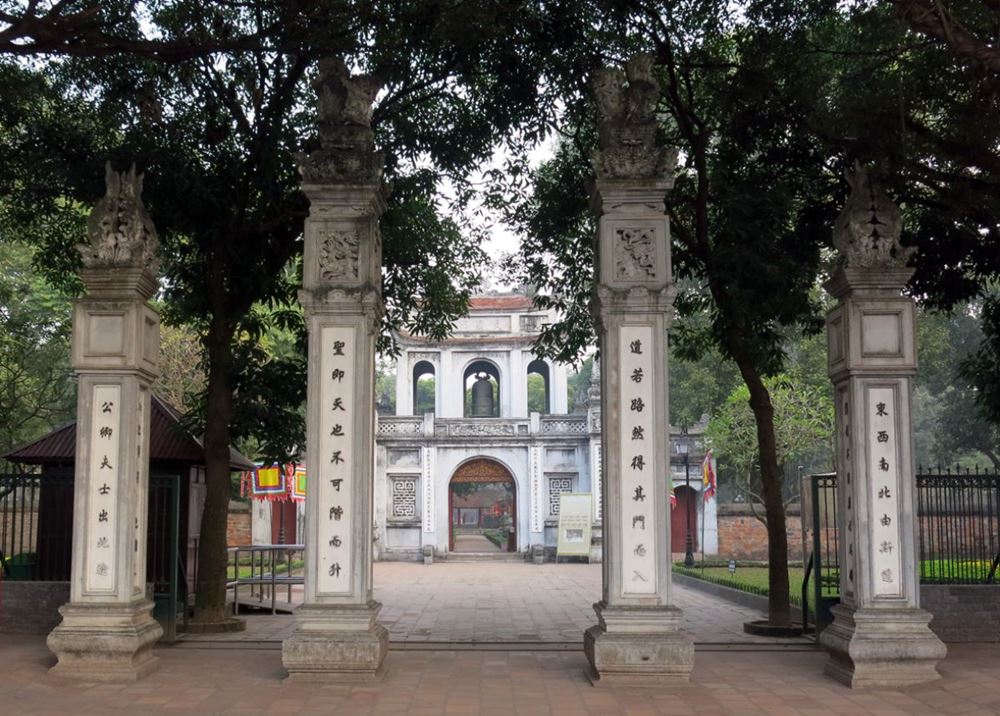
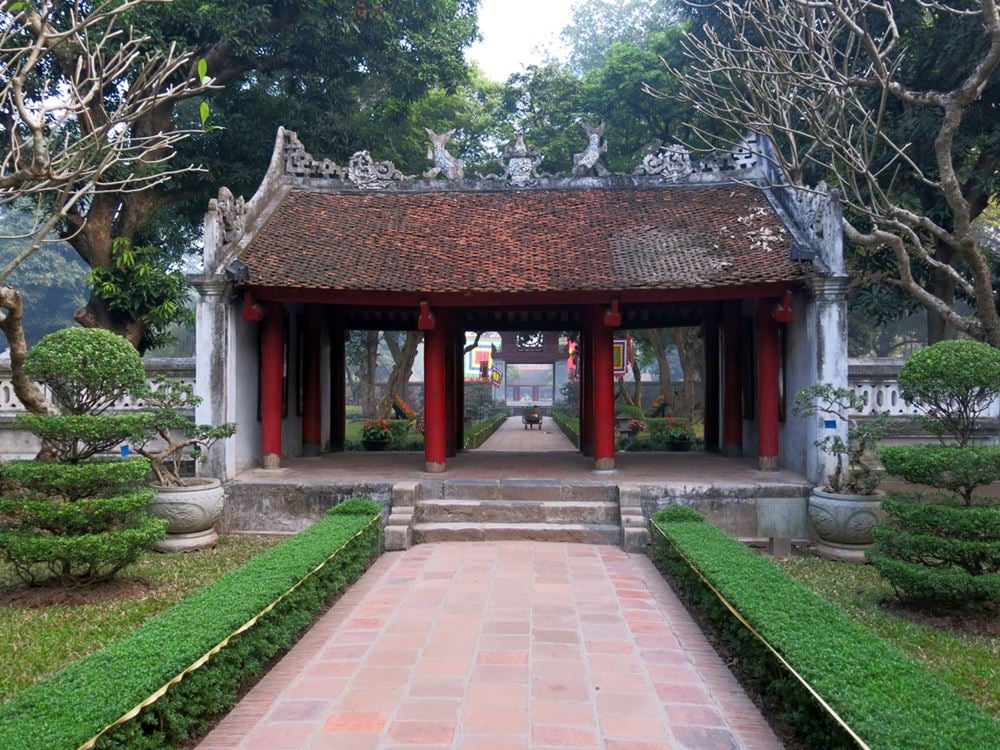
The triple-gated Van Mieu Mon is the first point of entry, greeting visitors with its ancient and solemn grandeur. In front stand the Four Pillars of Nghi Mon and two Hạ Mã stelae, reminding all of the solemnity of this place of learning. Following this is the Đại Trung Môn (Great Central Gate), with its gracefully curved roof and meticulously carved details, opening up the sacred space of the inner courtyards.
Khue Van Cac (Pavilion of the Constellation of Literature), a cultural icon of Hanoi, was built in 1...
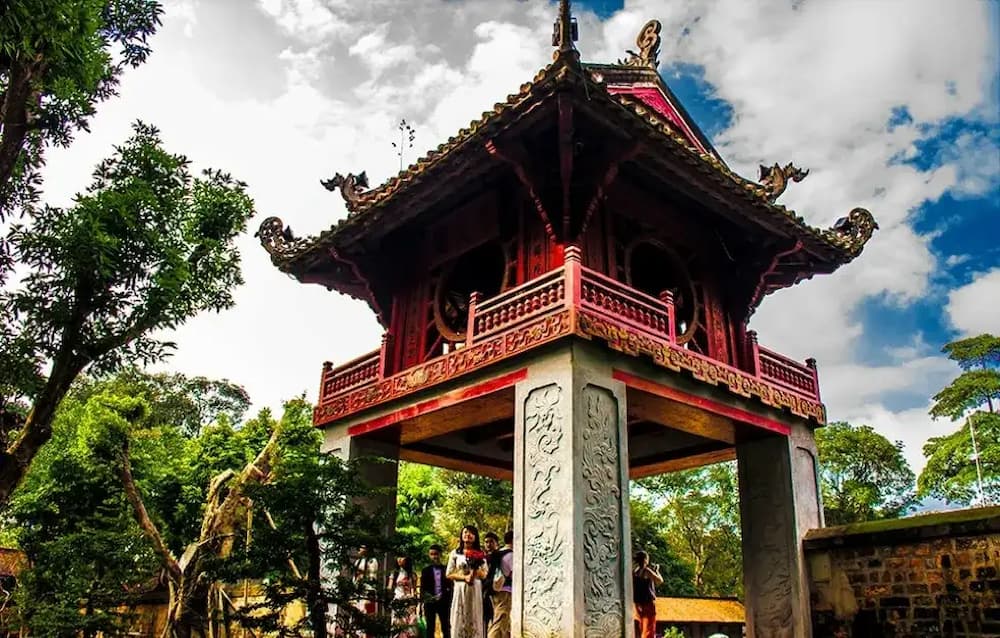
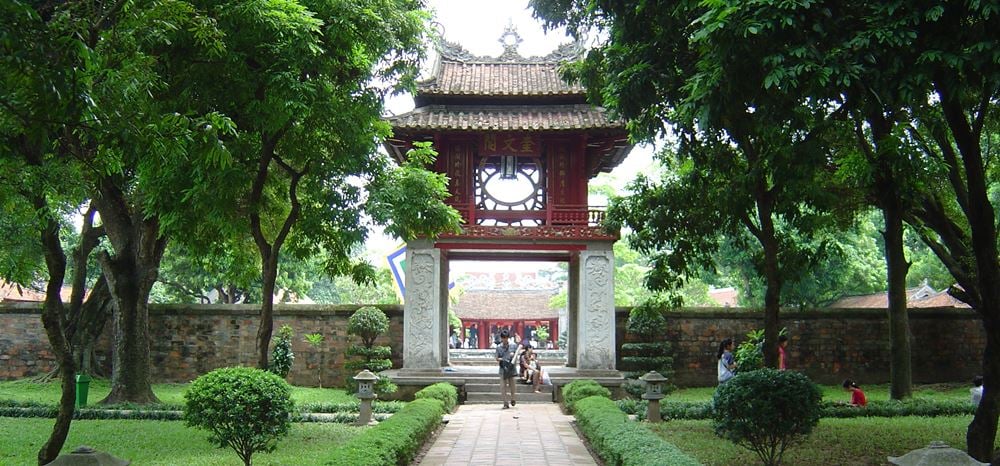
Khue Van Cac (Pavilion of the Constellation of Literature), a cultural icon of Hanoi, was built in 1805 during the Nguyen dynasty. With its unique architecture featuring four square brick pillars and a two-tiered wooden pavilion, Khue Van Cac was not only a venue for literary discussions but also a work of art, symbolizing the essence of literature and the aspiration for intellectual excellence.
Immediately behind Khue Van Cac lies the square-shaped Thien Quang Well (Well of Heavenly Clarity), ...
Immediately behind Khue Van Cac lies the square-shaped Thien Quang Well (Well of Heavenly Clarity), symbolizing Earth, harmonizing with the circular window of Khue Van Cac, which represents Heaven. This subtle combination reflects the harmonious yin-yang philosophy, where all the quintessence of heaven and earth converges, nurturing the intellect and spiritual energy of the former Thang Long capital's largest educational center.
Flanking the Thien Quang Well are rows of imposing stone stelae, comprising 82 Doctor's Stelae, each...
Flanking the Thien Quang Well are rows of imposing stone stelae, comprising 82 Doctor's Stelae, each resting on the back of a stone tortoise. These are UNESCO-recognized World Documentary Heritage items, commemorating 82 royal examinations and the names of 1,307 Doctors from the 15th to the 18th centuries. Each stele is a vivid testament to the tradition of valuing education and honoring the talented and virtuous individuals of the Vietnamese nation.
Beyond the Doctor's Stelae, visitors arrive at the Đại Thành Môn (Gate of Great Success) – a majesti...
Beyond the Doctor's Stelae, visitors arrive at the Đại Thành Môn (Gate of Great Success) – a majestic architectural structure with three compartments, red painted doors adorned with intricate dragon and cloud motifs. This gate leads to the Đại Bái Đường (Great Ceremonial Hall) and Khai Thanh Temple, dedicated to Kings Ly Thanh Tong, Ly Nhan Tong, and Le Thanh Tong – who played pivotal roles in establishing and developing national education. Finally, there is the Thai Hoc House (House of Great Learning), a space for ancient scholars to study, research, and discuss worldly affairs, where intellect was honed and cultivated.
For generations of Vietnamese students, Van Mieu - Quoc Tu Giam is not just a historical relic but a...
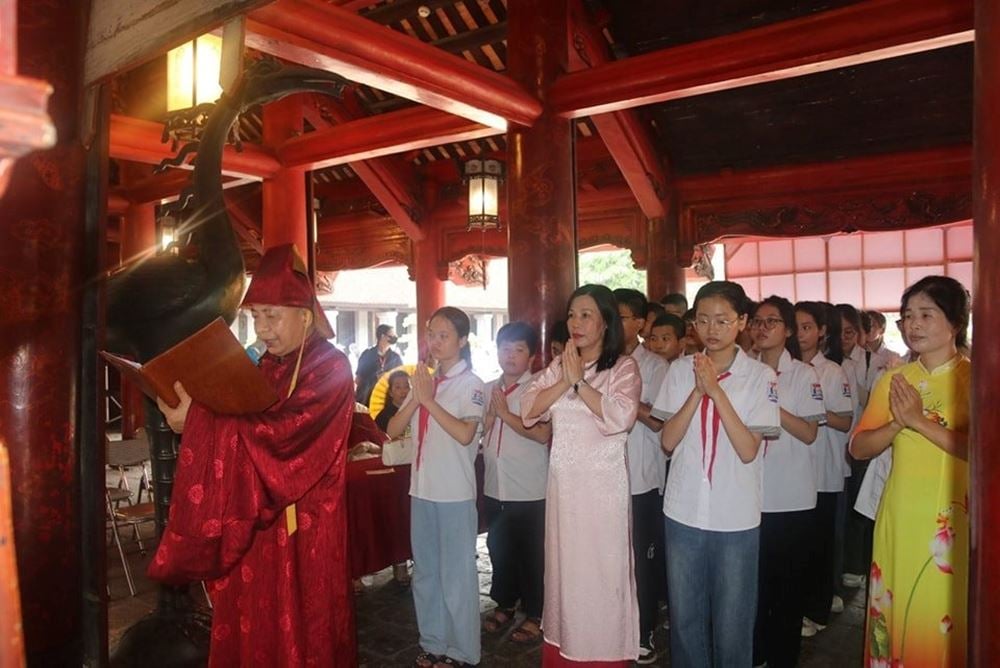
For generations of Vietnamese students, Van Mieu - Quoc Tu Giam is not just a historical relic but also a sacred spiritual sanctuary. Before every important examination, students and their parents often come here to offer incense, praying for good luck, success, and high scores. The belief in the spiritual energy of past scholars remains strong, providing a powerful source of motivation for the younger generation. It is a place that bridges the past and present, where traditions are inherited and cherished.
Beyond admiring the architecture and delving into history, visitors can also engage in unique activi...
Beyond admiring the architecture and delving into history, visitors can also engage in unique activities. Seek out calligraphers (Thầy đồ) to request beautiful Han script characters, embodying wishes for success and prosperity. Or immerse yourself in the academic atmosphere, exploring ancient philosophies and educational doctrines. Van Mieu also provides a wonderful backdrop for stunning, ancient-themed photos, preserving beautiful memories of elegant Hanoi.
An unmissable experience is the Van Mieu - Quoc Tu Giam night tour. With modern 3D Mapping technolog...
An unmissable experience is the Van Mieu - Quoc Tu Giam night tour. With modern 3D Mapping technology, professional lighting, and sound effects, the centuries-old silent Doctor's Stelae 'come alive,' narrating vivid stories of royal examinations and brilliant scholars. Visitors can also immerse themselves in a virtual reality world, exploring the monument in an entirely new and captivating way.
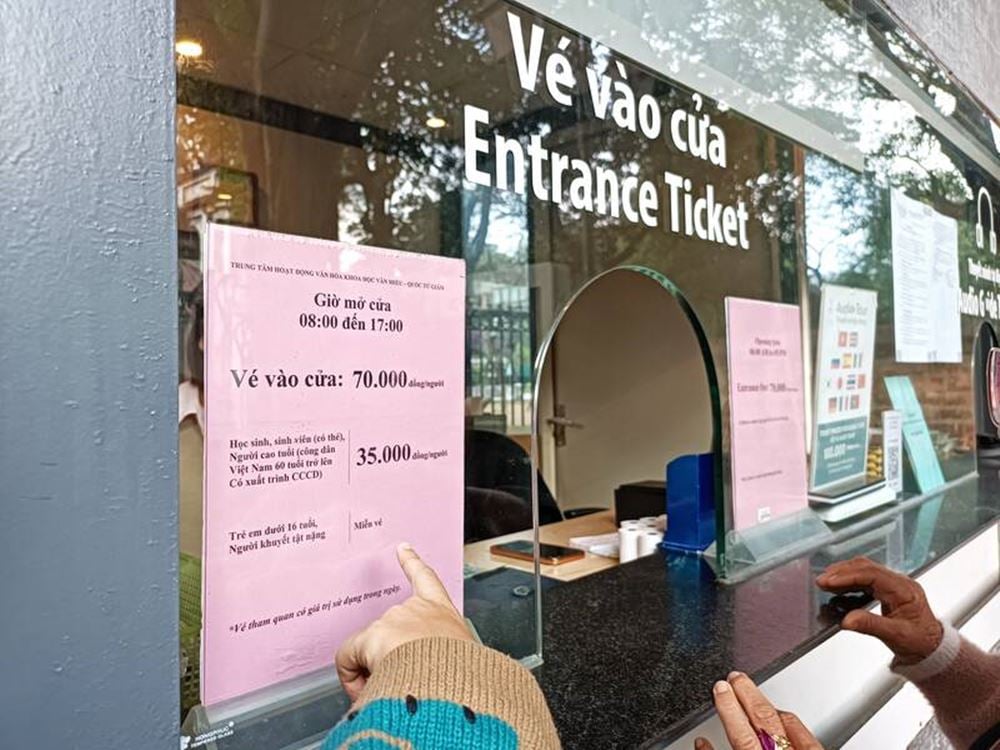
Van Mieu - Quoc Tu Giam welcomes visitors from 7:30 AM to 5:30 PM in summer and from 8:00 AM to 5:00 PM in winter. Admission is 70,000 VND for adults, 15,000 VND for students (with ID), and 35,000 VND for severely disabled individuals and seniors (Vietnamese citizens 60+ with ID). Children under 15 and teachers enjoy free admission. Please note that ticket prices may be adjusted on holidays and special events.
Van Mieu - Quoc Tu Giam, a magnificent emblem of Vietnam's educational excellence and tradition of learning, deserves to be a top destination on your Hanoi itinerary. Each visit is a profound connection to cultural roots, offering deeper insight into a nation that has always cherished knowledge and strived for civilization. Don't miss the chance to hear the whispers from a thousand years ago, where history and tradition continue to live in every breath of the present.

Essential Information

Best Time
The ideal time to visit Van Mieu - Quoc Tu Giam is during the early morning or late afternoon.
The weather is often more pleasant, less intense sun, and the complex is less crowded, allowing you to fully enjoy the peaceful atmosphere and admire the ancient architecture.
Avoid major holidays if you wish to escape large crowds, unless you specifically want to experience the lively atmosphere of special events.
Transportation
Reaching Van Mieu - Quoc Tu Giam is convenient, as it's centrally located in Hanoi, offering several options:
- Public Bus: Routes 02, 23, 38, and 41 have stops near the complex. This is an economical way to travel and experience local culture.
- Personal Motorbike or Bicycle: You can freely travel and park your vehicle at designated parking lots near the entrance for approximately 10,000 VND.
- Ride-hailing services (taxi, Xanh SM): For visitors unfamiliar with Hanoi's streets, booking a ride through apps like Xanh SM ensures a safe, swift, and convenient journey directly to the site. Feel free to contact Xanh SM's hotline at 1900 2088 if you need assistance.
Tips
Polite and modest attire is mandatory when visiting, especially in worship areas. Avoid overly short or revealing clothing to show respect.
Maintain general cleanliness and do not litter to preserve the site's beauty and sanctity.
Limit noise to avoid disturbing other visitors and maintain the solemn atmosphere of Van Mieu.
Be careful when moving around and absolutely do not touch the precious historical artifacts.
Allocate approximately 1 to 2 hours to explore the entire complex. Consider combining your visit with nearby attractions such as the Hanoi Flag Tower or Thang Long Imperial Citadel to optimize your itinerary.