Vietnam Canvas
Hero Image
Spiritual, Culture

Mieu Ba Chua Xu Nui Sam: The Mystical Spiritual Heart of the Seven Mountains Region

The South
7 min read

"Mieu Ba Chua Xu Nui Sam is not only the most sacred pilgrimage site in the Mekong Delta but also a repository of mysterious legends, unique architecture, and vibrant festival culture, attracting millions of visitors annually to pray and pay homage."

Stepping into Chau Doc, An Giang, you will immediately feel a land steeped in legend, where the majestic Sam Mountain embraces Mieu Ba Chua Xu – a spiritual landmark deeply imprinted with the passage of time and the faith of the Southern Vietnamese people. This is not just a destination to pray for peace and prosperity but also a living museum of local history, architecture, and culture. From the ancient statue, thousands of years old, shrouded in tales of its origin, to the stories of Ba's divine intervention protecting villagers, every corner of Ba Chua Xu Temple whispers intriguing secrets, inviting visitors to explore. The annual Via Ba Festival is a vibrant, colorful spectacle where faith and community intertwine, creating an unforgettable experience on your Vietnam Canvas journey.

Beauty Through Every Angle
Mieu Ba Chua Xu Nui Sam, nestled at the foot of the majestic Sam Mountain in Chau Doc city, An Giang...
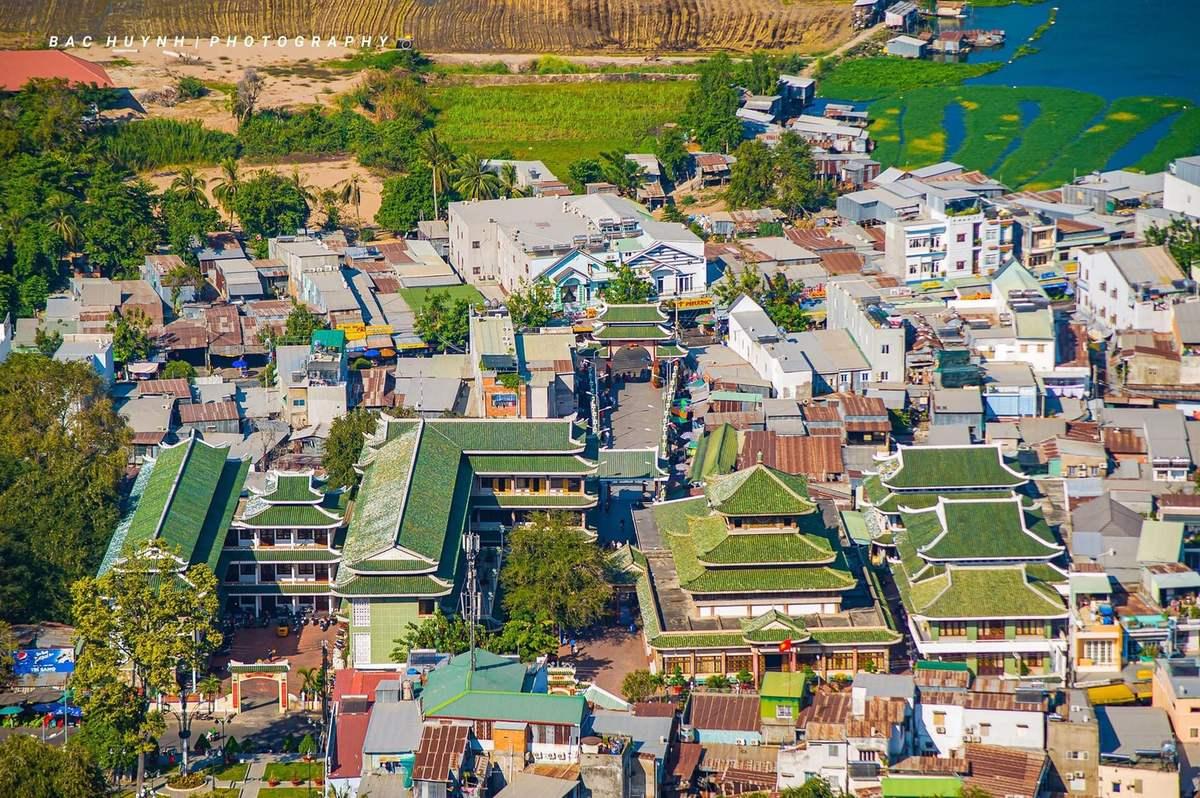
Mieu Ba Chua Xu Nui Sam, nestled at the foot of the majestic Sam Mountain in Chau Doc city, An Giang province, is one of the most famous pilgrimage and spiritual tourism sites in the Mekong Delta. Attracting over 4 million visitors annually, it is not only a cultural symbol but also the spiritual heart of the mysterious Seven Mountains region. Travelers come here not only to pray for good fortune and family peace but also to explore the fascinating legends and unique architecture that define this venerable temple.
The origin of the Ba Chua Xu statue has always been an intriguing enigma, captivating archaeologists...
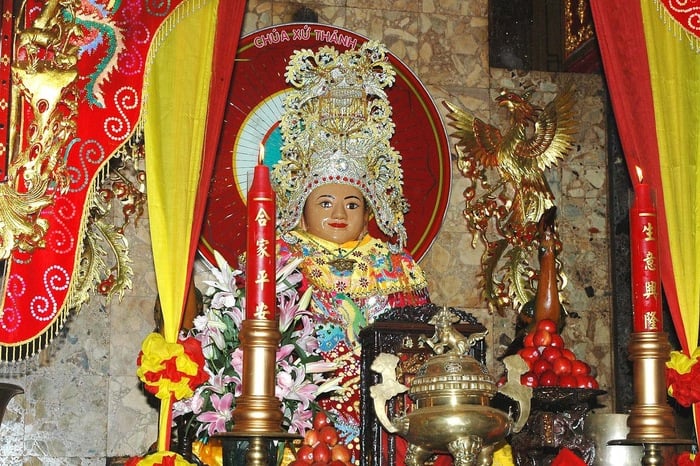
The origin of the Ba Chua Xu statue has always been an intriguing enigma, captivating archaeologists and visitors alike. According to French archaeologist Malleret's hypothesis in 1941, the statue is made of sandstone, possesses high artistic value, and dates back to the late 6th century, categorized as an Indian Vishnu deity. However, the late writer Son Nam asserted it was originally a male Khmer Buddhist statue, later embellished by the Vietnamese into a female Buddhist deity. Regardless, the diverse legends only add to the mystique and sanctity of this ancient artifact.
One of the most famous legends about Mieu Ba is the story of the statue's relocation from the peak o...
One of the most famous legends about Mieu Ba is the story of the statue's relocation from the peak of Sam Mountain to its base. When villagers wanted to bring Ba's statue down for easier worship, nine strong young men were unable to budge it. Miraculously, a young woman possessed by Ba revealed in a dream that nine virgin girls, freshly bathed, should be chosen to perform a ritual and carry the statue down. A miracle occurred as these nine girls effortlessly carried the statue. Upon reaching the current temple site, the statue suddenly became incredibly heavy, signaling Ba's chosen permanent resting place.
Ba Chua Xu's divine power is also evident in stories of her protecting villagers against foreign inv...
Ba Chua Xu's divine power is also evident in stories of her protecting villagers against foreign invaders. Legend has it that during a time when Siamese (Thai) forces frequently raided and plundered, villagers fled to Sam Mountain and prayed to Ba. Each time, they found safety. One anecdote recounts how dozens of Siamese soldiers attempted to carry Ba's statue back to their country, but it suddenly became immensely heavy. An enraged general struck and broke one of the statue's arms, only to die instantly, causing the remaining soldiers to flee in terror. From then on, villagers revered her as Ba Chua Xu (Lady of the Realm), and the couplet “Cầu tất ứng, thí tất linh, mộng trung chỉ thị – Xiêm khả kinh, Thanh khả mộ, ý ngoại nan lượng” (What is prayed for will be granted, what is given will be divine, dreams will show the way – The Siamese fear, the Qing admire, beyond imagination) was inscribed in her temple.
In the early 19th century, Thoai Ngoc Hau, under orders from Emperor Gia Long, governed the Southwes...
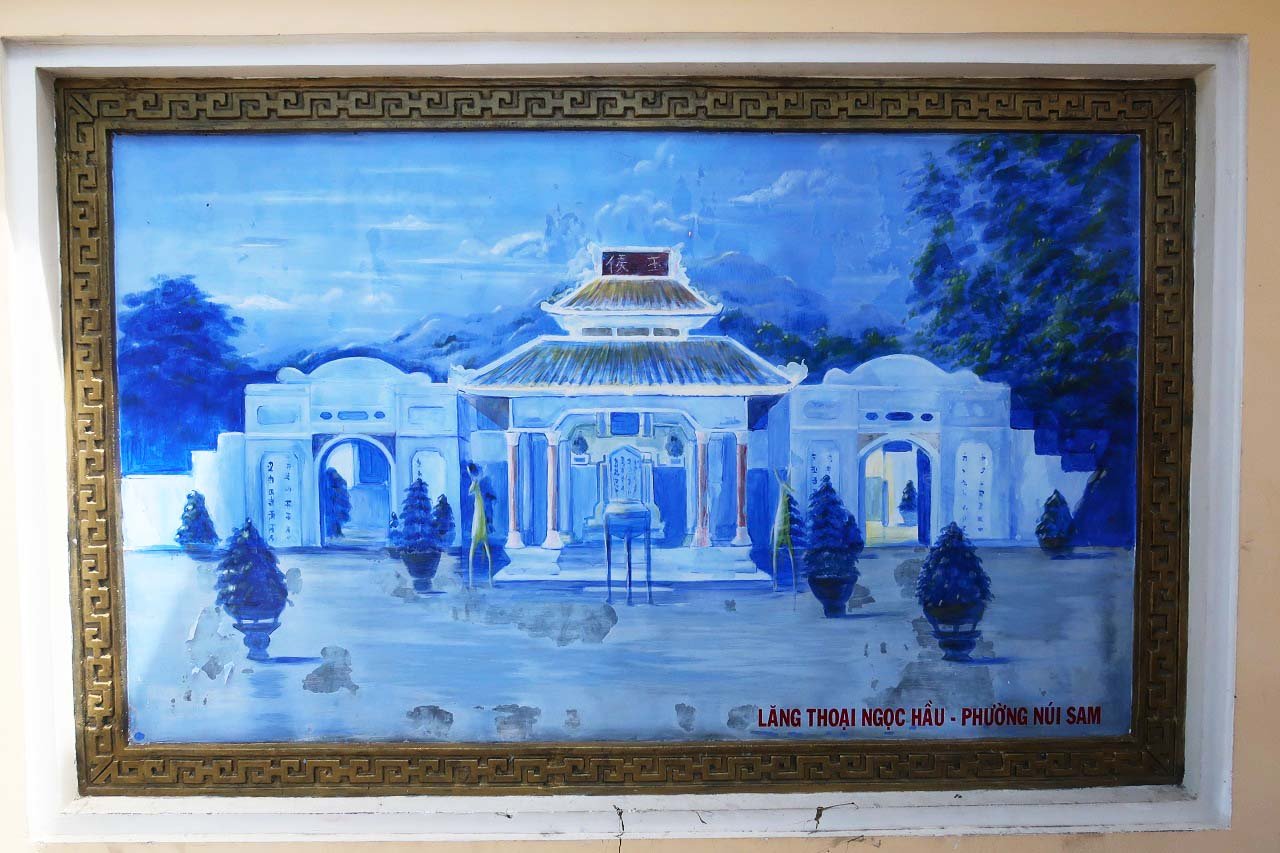
In the early 19th century, Thoai Ngoc Hau, under orders from Emperor Gia Long, governed the Southwestern region and oversaw the excavation of the Vinh Te Canal – a magnificent 100km-long project. However, construction faced continuous difficulties, with many laborers dying from accidents and illness. Thoai Ngoc Hau's wife, Chau Thi Te, ascended Sam Mountain to pray to the sacred statue. After her rites, the project miraculously proceeded smoothly. From then on, Thoai Ngoc Hau placed absolute faith in Ba Chua Xu and decided to renovate and build the temple majestically, as it stands today, for the people to worship more attentively and sincerely. This story is a powerful testament to Ba Chua Xu's spiritual influence in the hearts of the people.
The current Mieu Ba Chua Xu boasts exceptionally unique architecture, harmoniously blending traditio...
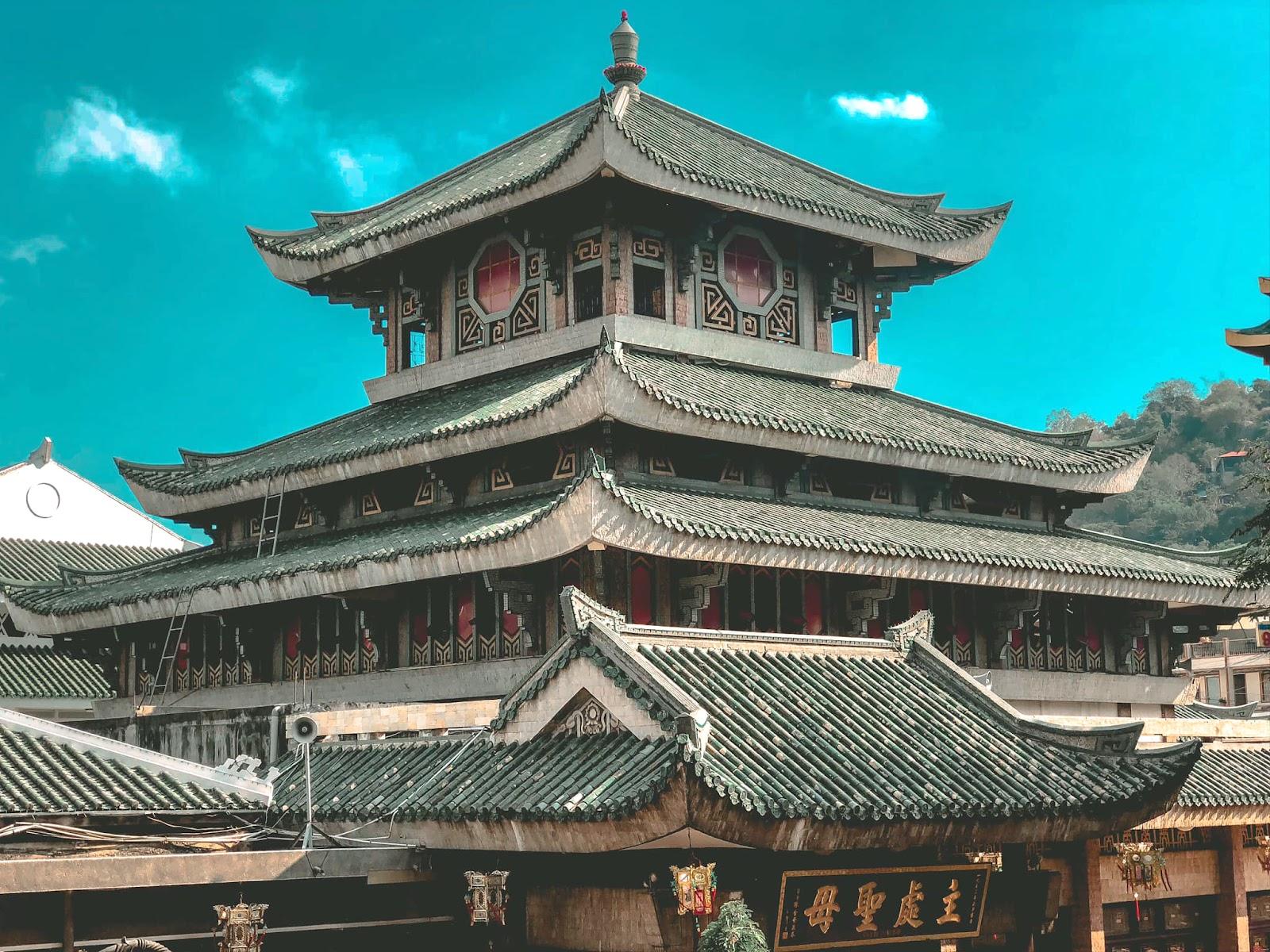
The current Mieu Ba Chua Xu boasts exceptionally unique architecture, harmoniously blending traditional Vietnamese aesthetics with Eastern, particularly Indian, elements. From its initial simple wooden structure, the temple has undergone numerous renovations and reconstructions, notably between 1972 and 1976 under architects Nguyen Ba Lang and Huynh Kim Mang. The new architecture features a 'Quoc' character shape, with a three-tiered roof covered in jade-green tiles, creating a harmonious and imposing facade. Intricate carvings on the doors, columns, and walls behind Ba's statue showcase the master craftsmanship of ancient artisans, enhancing the temple's antique and sacred beauty.
The Via Ba Chua Xu Nui Sam Festival is one of the largest and most vibrant festivals in the Mekong D...
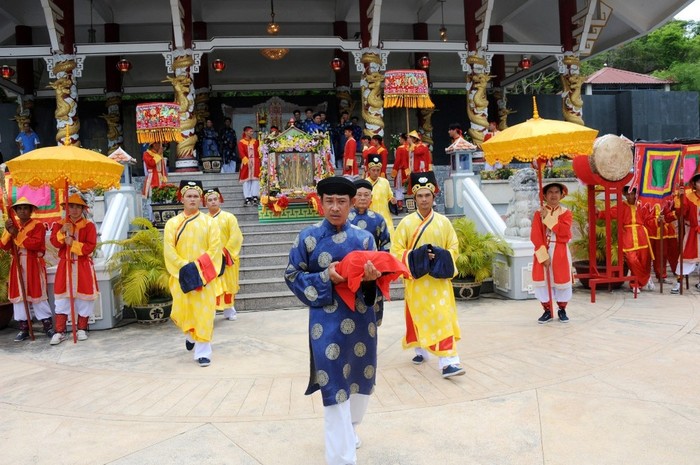
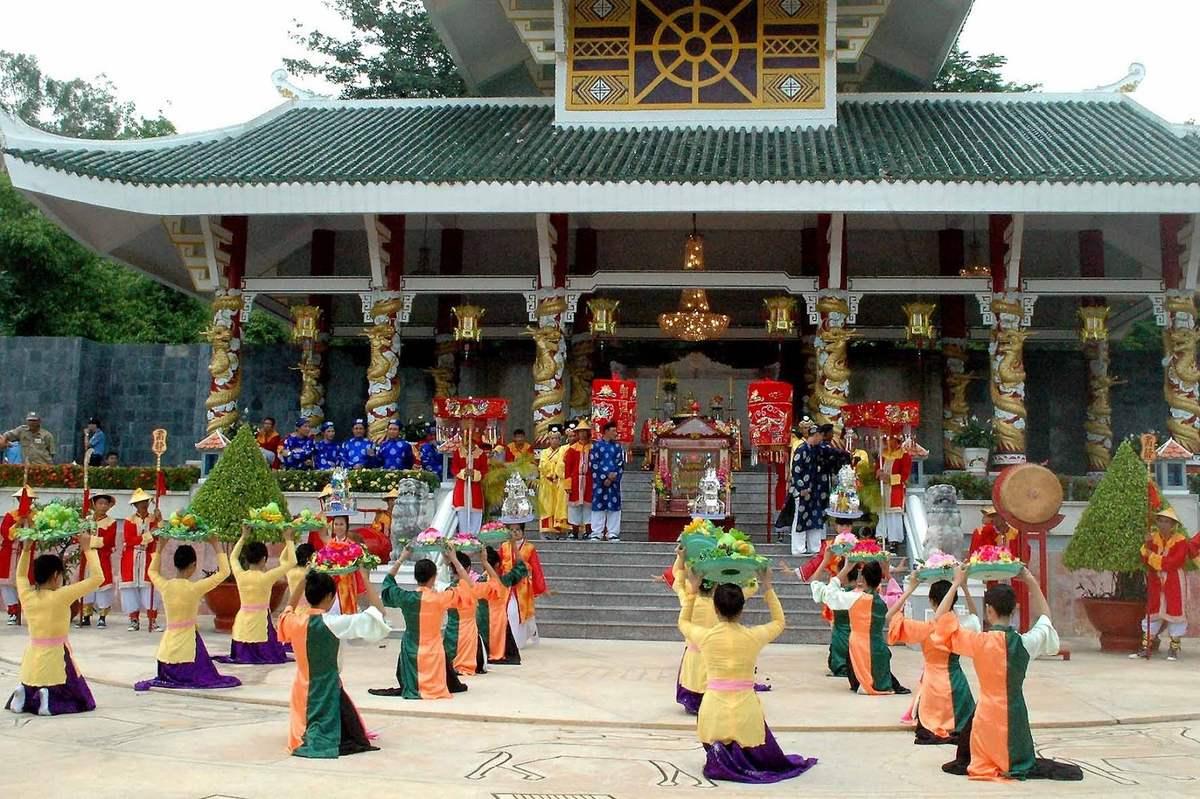
The Via Ba Chua Xu Nui Sam Festival is one of the largest and most vibrant festivals in the Mekong Delta, taking place annually from the 23rd to the 27th day of the 4th lunar month, with the main day being the 25th. Recognized by the Ministry of Culture, Sports and Tourism as a National Intangible Cultural Heritage in 2015, the festival draws tens of thousands of visitors and devotees from all over. In this lively atmosphere, visitors can immerse themselves in solemn traditional rituals, savor local delicacies, and participate in unique cultural and artistic activities such as hát bội (classical opera), martial arts performances, ngũ âm (five-tone music), lion dances, and chess games, creating an unforgettable experience.
The Via Ba Festival comprises several solemn and elaborate rituals. The "Le Tam Ba" (Bathing the Sta...
The Via Ba Festival comprises several solemn and elaborate rituals. The "Le Tam Ba" (Bathing the Statue) takes place at midnight on the 23rd leading into the 24th day of the 4th lunar month, where Ba's statue is ritually cleansed with perfumed water. This is followed by the "Le Thinh Sac" (Procession of Mandarins' Tablets), which involves escorting the tablets and venerated positions of Thoai Ngoc Hau and his two wives from Son Lang to the temple on the afternoon of the 25th. "Le Tuc Yet" (Preliminary Offering) and "Le Chanh Te" (Main Offering) are the main sacrificial ceremonies with various offerings and classical opera performances, held on the night of the 25th/26th and early morning of the 27th respectively. Finally, "Le Hoi Sac" (Returning the Tablets) in the afternoon of the 27th returns the tablets to Son Lang, concluding a deeply meaningful festival season.
After paying homage and visiting Mieu Ba Chua Xu, visitors can explore the Sam Mountain relic comple...
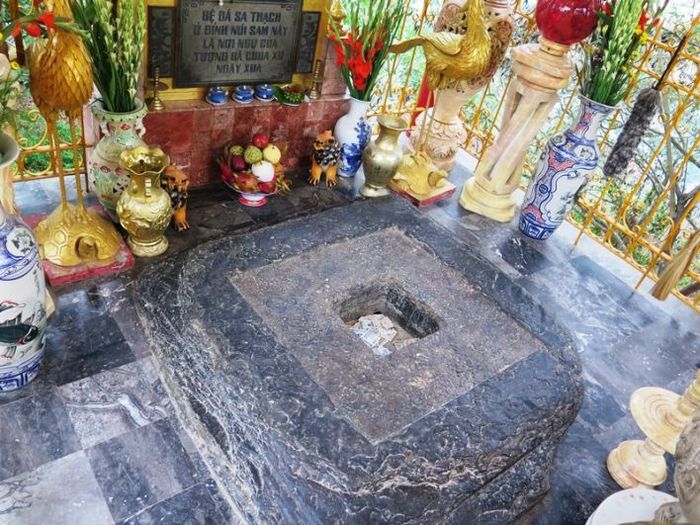
After paying homage and visiting Mieu Ba Chua Xu, visitors can explore the Sam Mountain relic complex, featuring other historical and spiritual sites. Highlights include Tay An Ancient Pagoda with its unique blend of Indian and Vietnamese architecture, Thoai Ngoc Hau Tomb—the resting place of the esteemed imperial official, and Hang Pagoda (Phuoc Dien Tu) with its peaceful atmosphere nestled within a cave. From the summit of Sam Mountain, visitors can also enjoy panoramic views of Chau Doc city and the winding Mekong River, offering moments of tranquility and contemplation.
In Chau Doc, a culinary journey is an indispensable part of the experience. Chau Doc Market is famou...
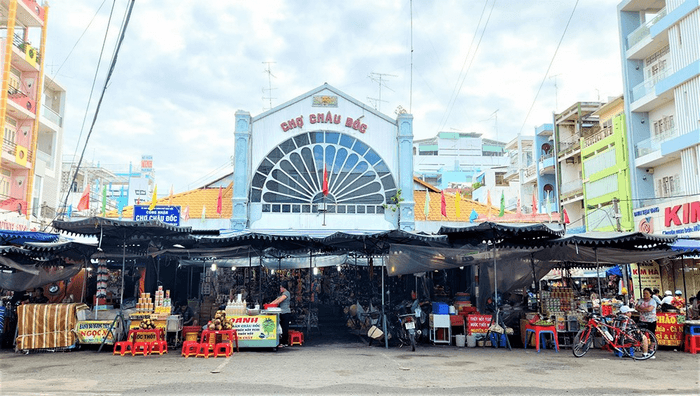
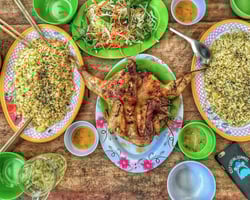
In Chau Doc, a culinary journey is an indispensable part of the experience. Chau Doc Market is famously known as the "kingdom of fermented fish" in the Mekong Delta, where visitors can find countless types of fermented fish, dried fish, and shrimp specialties to buy as gifts. Additionally, don't miss trying the renowned local dishes such as the rich and savory bun mam Chau Doc, the refreshing sweet bun ca, or the aromatic thot not (palm sugar) cake. These distinct flavors not only enrich the travel experience but also serve as a bridge for visitors to better understand the culture and hospitable people of this riverine region.

Essential Information

Best Time
The ideal time to visit Mieu Ba Chua Xu is during the Lunar New Year to pray for peace and prosperity in the new year, or more specifically, during the Via Ba Chua Xu Nui Sam Festival, which takes place from the 23rd to the 27th day of the 4th lunar month, with the main day being the 25th day of the 4th lunar month.
During these times, the festival atmosphere is extremely vibrant and solemn, but also very crowded.
If you prefer a quieter experience, consider visiting on weekdays to avoid the crowds and enjoy a more peaceful pilgrimage.
Transportation
From Ho Chi Minh City, you can travel to Chau Doc by sleeper bus (approximately 4-5 hours, fares from 175,000 VND/person) or private car/motorbike (around 200km).
Popular bus companies like Phuong Trang and Kim Mai offer direct routes to Chau Doc.
From Chau Doc city center, Mieu Ba is about 9km away. You can easily get there by motorbike taxi (xe om), taxi, or shuttle services provided by bus companies.
If driving a motorbike, there are two main routes: National Highway 62 towards Binh Hiep to Tan Chau then Chau Doc; or National Highway 1A across My Thuan Bridge, National Highway 80 to Sa Dec, across Vam Cong Bridge into Long Xuyen, then follow National Highway 90 to Chau Doc.
Tips
Attire: It is advisable to choose modest, polite clothing when visiting the temple, avoiding overly short or revealing outfits to show respect.
Personal Belongings: During festival seasons, crowds are large, so be cautious with personal belongings, avoiding carrying too much cash or valuable jewelry.
Food and Drink: Only consume food and drinks at establishments that guarantee food safety and hygiene when trying local specialties.
Offerings and Services: It's best to prepare offerings at home or purchase them from larger stores. Always ask for prices clearly before purchasing any services or offerings from street vendors to avoid overcharging or persistent solicitation.
Ba's Blessings (Loc Ba): Avoid accepting blessings or gifts from unsolicited individuals outside the temple, as they often demand payment. If you wish to receive blessings, go inside the temple and make a voluntary donation.
Respect Local Customs: Maintain a solemn and respectful attitude towards local culture and beliefs throughout your pilgrimage.