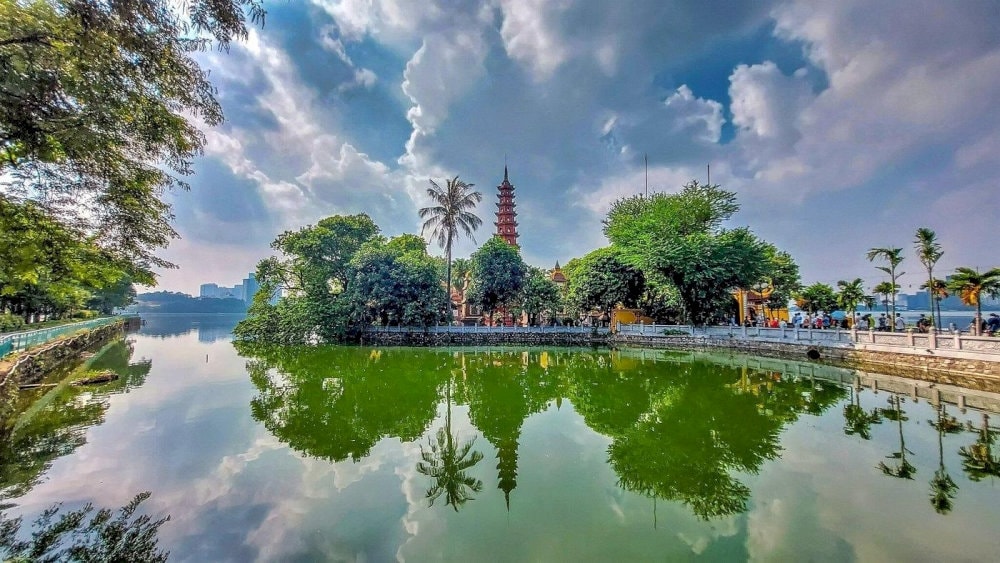
Step into a realm of profound spirituality and ancient beauty at Trấn Quốc Pagoda, where every brick and statue whispers tales of over a millennium of history. Gracefully positioned on a tranquil islet amidst the verdant expanse of West Lake, the pagoda is not merely a spiritual destination but an architectural marvel, a testament to the evolution of Vietnamese Buddhism. Its cinematic charm and peaceful ambiance beckon travelers into an emotional journey, connecting them to the timeless soul of Hanoi.
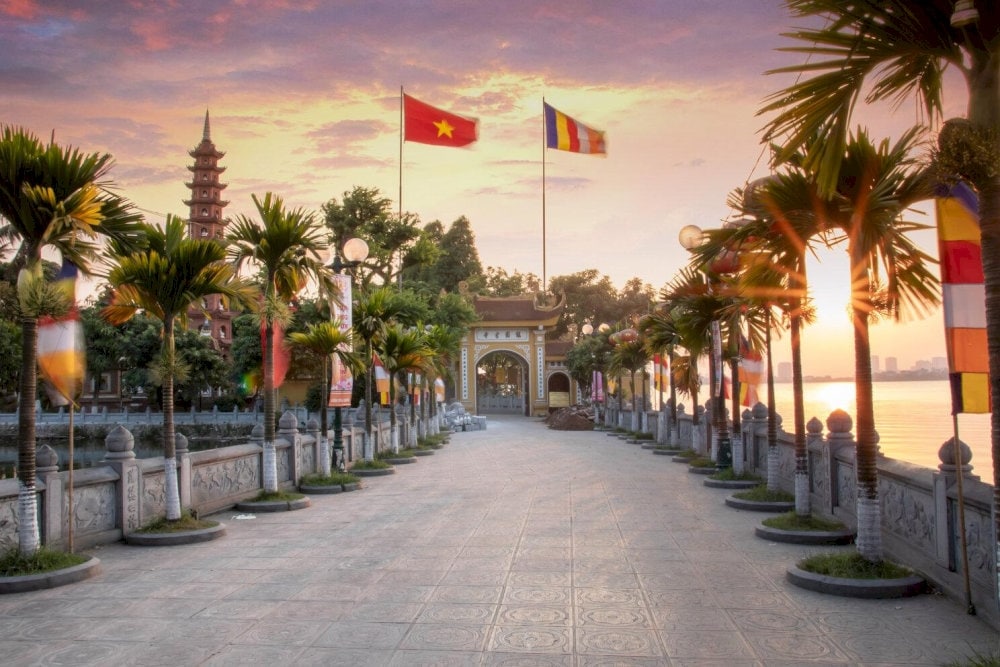
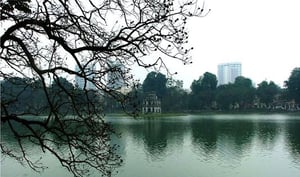
The pagoda is located on Thanh Niên Road, Yên Phụ Ward, Tây Hồ District, just about 4 km from the city center, making it easily accessible. Its unique island setting, embraced by ancient trees and the serene waters of West Lake, creates a picturesque and peaceful sanctuary. Especially at sunset, Trấn Quốc Pagoda's gate glows, blending ancient charm with the lake's golden hues, offering an unforgettable panorama and an ideal spot to contemplate the harmonious blend of nature and architecture.
With over 1,500 years of history, Trấn Quốc Pagoda was initially built in the 6th century under Emperor Lý Nam Đế and was originally known as 'Khai Quốc Pagoda'. It was later relocated to Kim Ngư islet on West Lake in 1615 to protect it from erosion along the Red River. Throughout its long history, the pagoda has undergone several name changes, each reflecting different historical periods. A significant event occurred in 1959 when India's President Rajendra Prasad gifted a Bodhi tree, a sapling from the sacred tree in Bodh Gaya where the Buddha attained enlightenment, symbolizing the enduring Buddhist ties between Vietnam and India and further enriching the pagoda's historical and spiritual value.
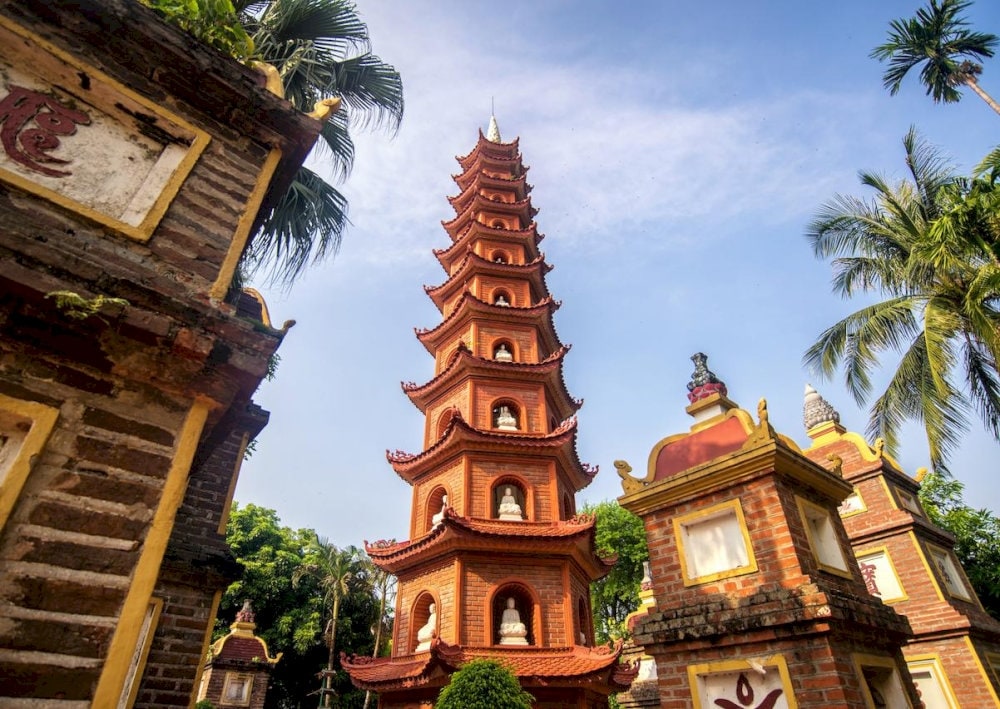
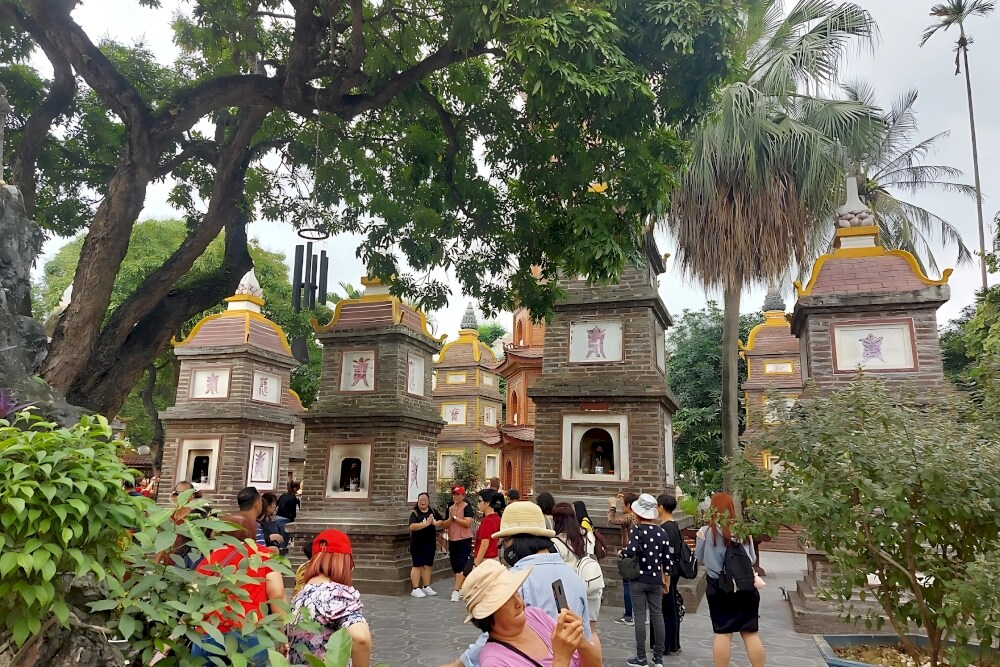
The pagoda's most striking architectural feature is the iconic 11-storey stupa, standing 15 meters tall, built in 1998. With its symmetrical design, the stupa is adorned with intricate lotus motifs, symbolizing spiritual enlightenment. Each of the 11 tiers features six arched windows, each housing a meticulously crafted Amitabha Buddha statue made from precious stones, totaling 66 statues. Crowning the stupa is a nine-tiered lotus tower, also fashioned from precious stones, representing spiritual ascension, creating a majestic and deeply meaningful architectural masterpiece.
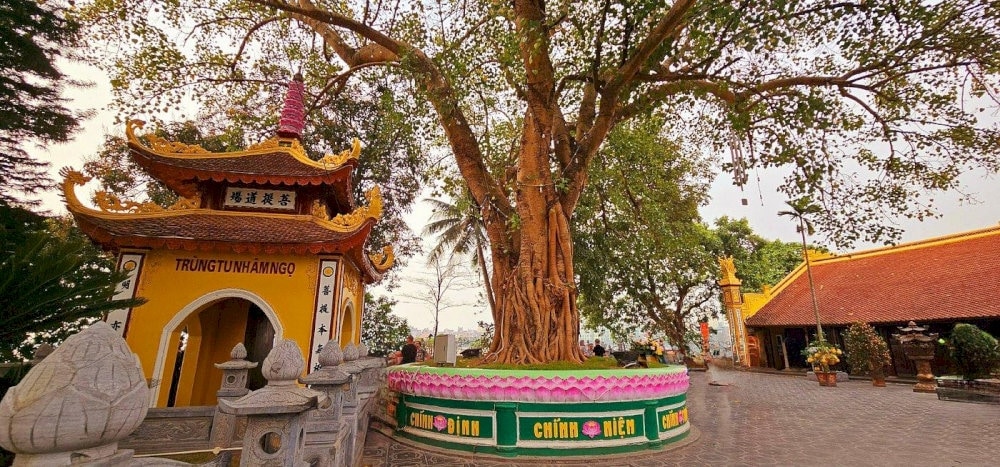
Adjacent to the majestic stupa, the sacred Bodhi tree stands tall as a living symbol of wisdom and peace. This invaluable gift was presented by India's President Rajendra Prasad in 1959, a direct descendant of the original Bodhi tree in Bodh Gaya, where Lord Buddha achieved enlightenment. The presence of this Bodhi tree not only enhances the pagoda's aesthetic beauty but also strengthens the profound spiritual connection between Vietnam and the birthplace of Buddhism, offering a space for meditation and inspiration for all visitors.
The Tiền Đường, or Front House, serves as the main entrance, welcoming visitors into the sacred confines of the pagoda. Adorned with distinctive traditional Vietnamese architecture—deep red tiled roofs, sturdy wooden columns, and intricate carvings—it reflects the elegance of ancient craftsmanship. This is not merely a physical gateway but also the starting point for various Buddhist ceremonies, setting a solemn and tranquil atmosphere from the very first steps inside.
Following the Tiền Đường, the Nhà Thiêu Hương, or Incense Burning House, is a sacred space where devotees light incense to express their reverence and spiritual devotion. Designed with traditional wooden architecture, this section seamlessly connects the Tiền Đường and the Thượng Điện. The gentle, lingering scent of incense perpetually fills the air, further enhancing the pagoda's serene atmosphere, inviting visitors into an experience of quiet contemplation and deep spiritual connection.
At the heart of Trấn Quốc Pagoda lies the Thượng Điện, or Upper House, the most sacred space within the complex. This hallowed hall houses a remarkable collection of ancient Buddha, Bodhisattva, and Arhat statues. Each statue is exquisitely carved with intricate details, showcasing the artistry and piety of generations past. It is here that devotees come to offer prayers, light incense, and seek blessings, where whispered supplications are made, and the spiritual essence of the pagoda is most profoundly felt, immersing visitors in its divine tranquility.
The Nhà Bia, or Stele House, at Trấn Quốc Pagoda preserves 14 ancient stone steles, documenting the pagoda's rich history, most notably a stele from 1813 detailing Emperor Gia Long's significant restoration efforts. These intricate Chinese-character inscriptions not only reflect the pagoda's evolution but also testify to the profound influence of Buddhism over many centuries. With its traditional architecture of tiled roofs and sturdy wooden columns, the Stele House serves as a living bridge between the past and present, offering insightful glimpses into the cultural and spiritual heritage of Vietnam's oldest pagoda.
To ensure a respectful and fulfilling visit to Trấn Quốc Pagoda, adherence to key guidelines is essential. Please dress modestly and respectfully, ensuring your shoulders and knees are covered to honor the sacred space. Maintain silence, refraining from loud talking or playful behavior to preserve the tranquil and spiritual ambiance. Importantly, do not pick flowers or break branches within the pagoda grounds, and avoid photography or videography in worship areas. These practices contribute to a thoughtful and enriching experience, allowing you to truly immerse yourself in the pagoda's serenity.
After immersing yourself in the sacred ambiance of the pagoda, take a leisurely stroll along the picturesque West Lake roads such as Nguyễn Đình Thi, Trích Sài, Yên Phụ, or Trấn Vũ along Trúc Bạch Lake. Here, you’ll discover a myriad of cafes, ranging from trendy, modern spaces to charming traditional spots. These cafes not only offer a diverse menu of beverages but also boast stunning views overlooking the lake. For an elevated perspective, rooftop cafes provide a perfect setting to relax, admire the vibrant sunset, and soak in the peaceful atmosphere of Hanoi.
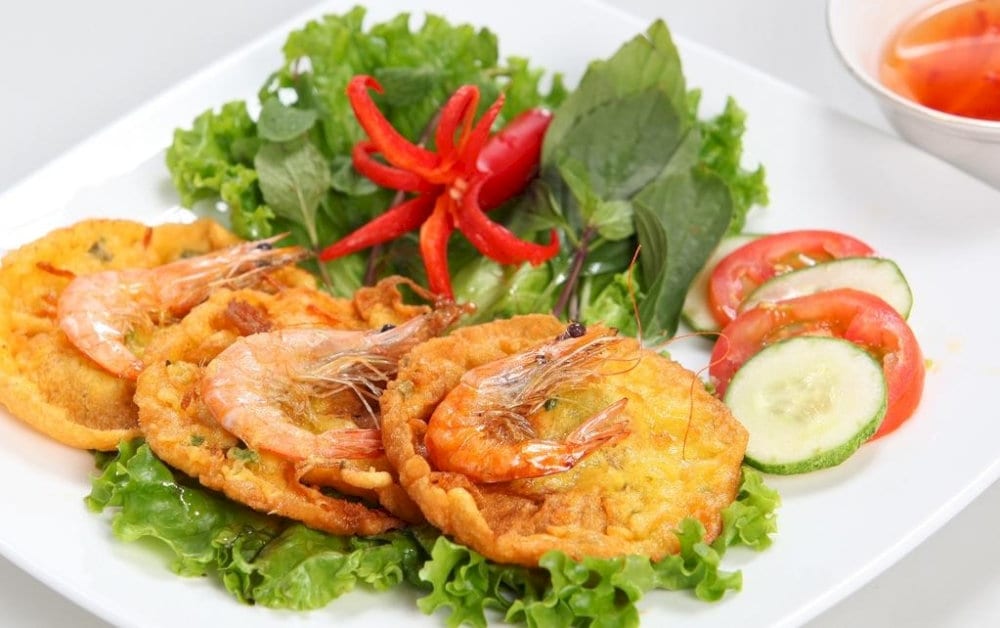
The area around Trấn Quốc Pagoda is a street food paradise you shouldn't miss. Right opposite the pagoda, the famous Kem Hồ Tây (West Lake Ice Cream) entices with classic flavors like vanilla, coconut, and green tea—a local favorite perfect for enjoying amidst the cool breeze from the lake. Another must-try is Bánh Tôm Hồ Tây (West Lake Shrimp Cakes), crispy and golden with fresh shrimp inside, served with aromatic herbs and sweet-sour fish sauce for an unforgettable taste. For more local snacks, try Nem Chua Rán Thụy Khuê (Fried Fermented Pork Roll). Recommended spots include: Kem Hồ Tây (9 Thanh Niên Road), Bánh Tôm Cô Ấm (84 Hàng Chiếu), Nem Chua Rán Thụy Khuê (Alley 2 Dốc La Phố Road).
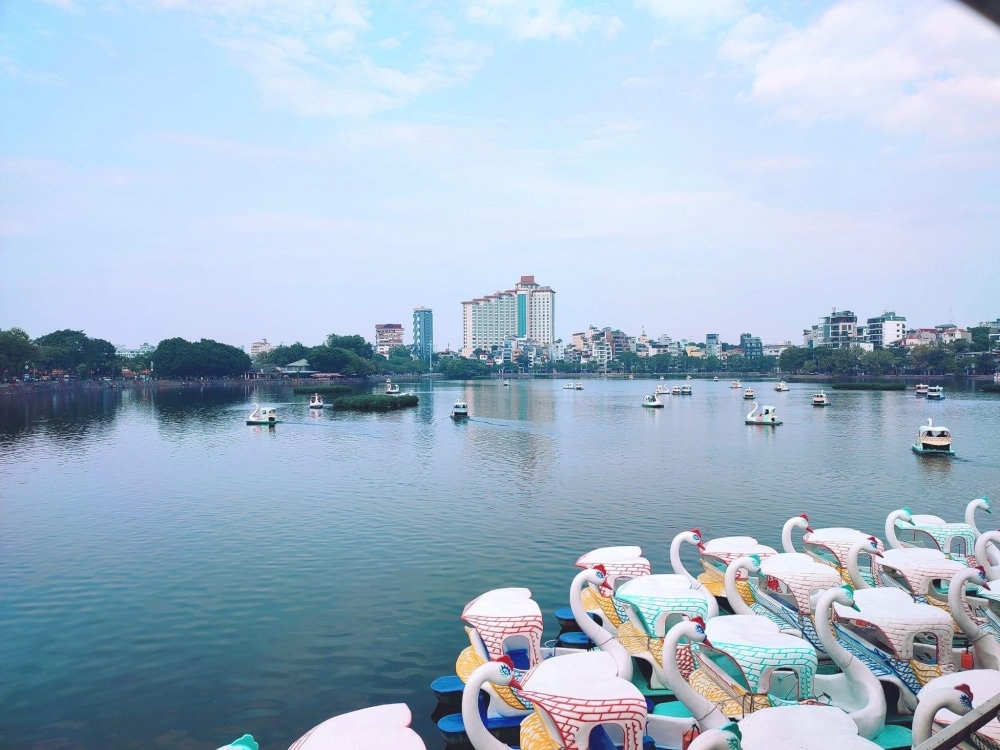
Adjacent to West Lake, Trúc Bạch Lake offers another peaceful experience: a swan pedalo ride. As you gently glide across the calm waters, you’ll be surrounded by beautiful scenery, tree-lined paths, charming historical buildings, and other boats lazily drifting by. Swan pedalos are easily rented at designated spots along Trúc Bạch Lake's shore. Known as one of Hanoi's most romantic spots, the lake becomes even more magical at sunset, when soft golden light reflects on the shimmering water, creating a serene and enchanting backdrop perfect for a quiet ride or a memorable moment with loved ones. Rental prices are around 100,000 VND for a small boat and 200,000 VND for a larger one.
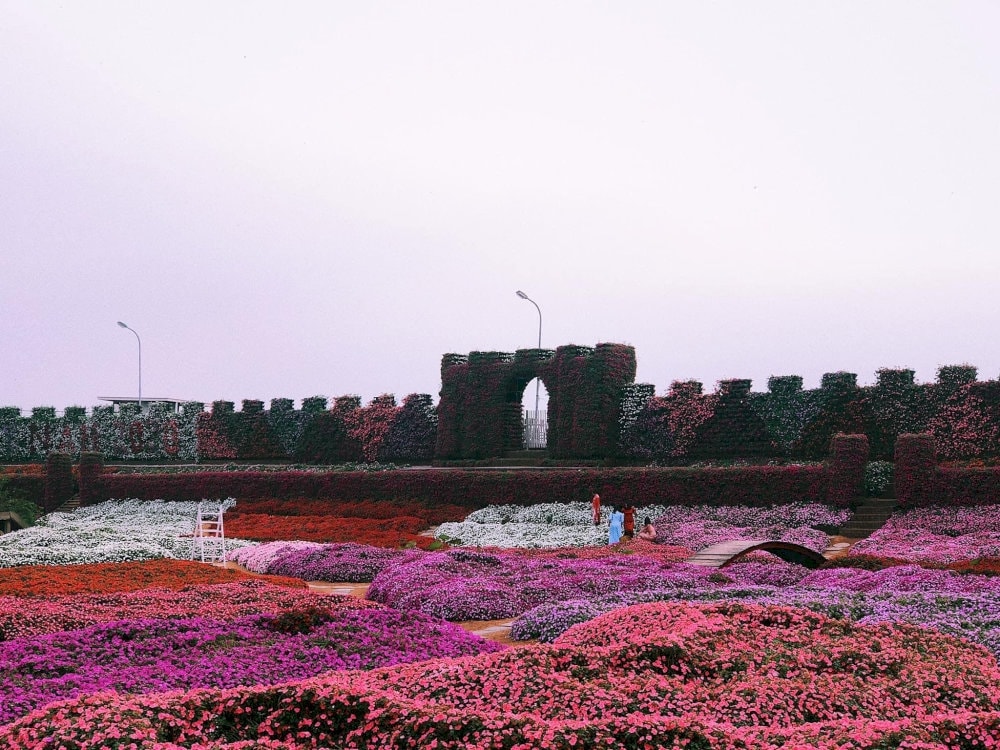
Located at the intersection of Nhật Chiêu and Nhật Tân roads in Tây Hồ District, the West Lake Flower Valley is a paradise for nature lovers and photography enthusiasts. This picturesque garden boasts a vibrant array of flowers, from delicate white daisies and brilliant roses to fragrant lavender fields. The thoughtfully arranged flowerbeds are complemented by charming decorative landscapes, creating countless opportunities for stunning photographs. The flower valley blooms year-round, with each season presenting its unique floral displays. Visit from November to December for blooming white daisies, June to September for a spectacular sea of pink and white lotus, and July for vibrant yellow sunflowers. Entrance fee is 100,000 VND per person.
Trấn Quốc Pagoda is more than just a place of worship; it is a profound symbol of Hanoi's spiritual heritage and elegant architecture. Nestled by the serene West Lake, the pagoda offers a peaceful retreat where history, culture, and nature converge. Visiting here is not merely sightseeing, but an immersion into the very soul of the city, where one can find tranquility and endless inspiration. Let Trấn Quốc Pagoda be the starting point for your journey to discover the hidden beauties of Hanoi.