
Landscape, Mountain
Múa Cave – Where Dragons Ascend, Vietnam's Miniature Great Wall
The North
4 min read
"Ascend to the Dragon's Peak at Múa Cave and witness the breathtaking panorama of Tam Cốc, where heritage and nature converge in a majestic symphony."
Ninh Bình, a land of natural wonders and cultural heritage, harbors a precious gem named Hang Múa, or Múa Cave. Dubbed the "muse of Tam Cốc" and "Vietnam's version of the Great Wall," Múa Cave is not just a destination but an emotional journey of discovery, where every step brings you closer to the moving beauty of land and sky. From the winding stone path leading to Múa Peak, visitors are treated to picturesque landscapes, a sense of history, and an immersion in a sacred, mystical atmosphere.
Beauty Through Every Angle
Múa Cave is nestled in Khê Đầu Hạ village, Hoa Lư ward, Ninh Bình province, an integral part of the Tràng An Scenic Landscape Complex – a UNESCO World Heritage site. Located just 10 km southwest of Hoa Lư city center and about 100 km from Hanoi, Múa Cave is easily accessible, opening a gateway to a world of millions-year-old limestone mountains and magnificent landscapes. It is not merely a destination, but an immersive experience into the flow of history and the endless beauty of nature.
The highlight that defines Múa Cave is the path leading to Ngọa Long Peak (Múa Mountain), featuring nearly 500 winding stone steps, mimicking the majestic architecture of the Great Wall. Each step is a challenge, yet also an invitation to explore. Along this path, intricate stone dragon statues coil, seemingly beckoning visitors to conquer the ascent. At the summit, a majestic dragon statue bows before a statue of Bodhisattva Quan Âm, symbolizing strength and peace, and creating a unique architectural marvel found nowhere else.
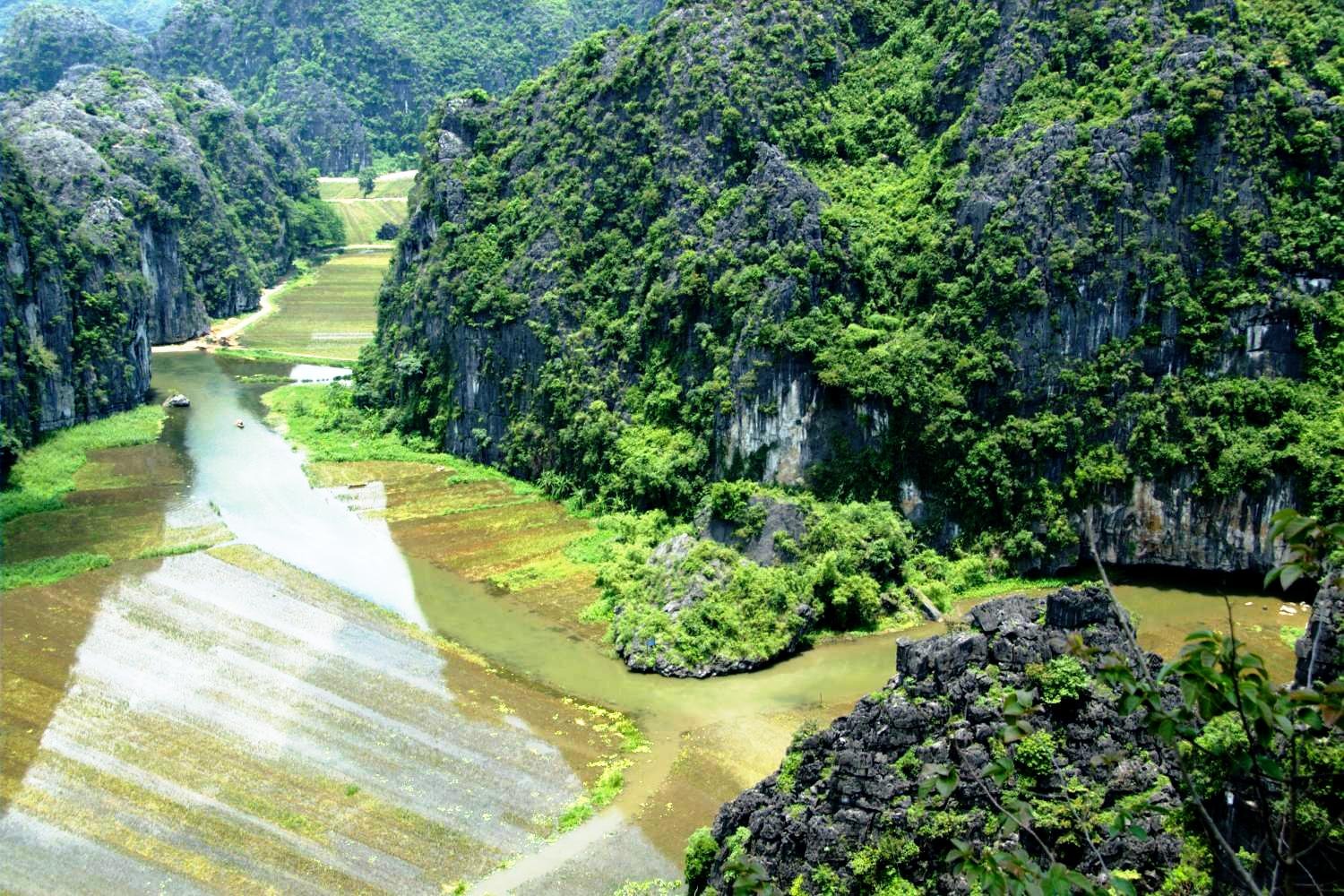
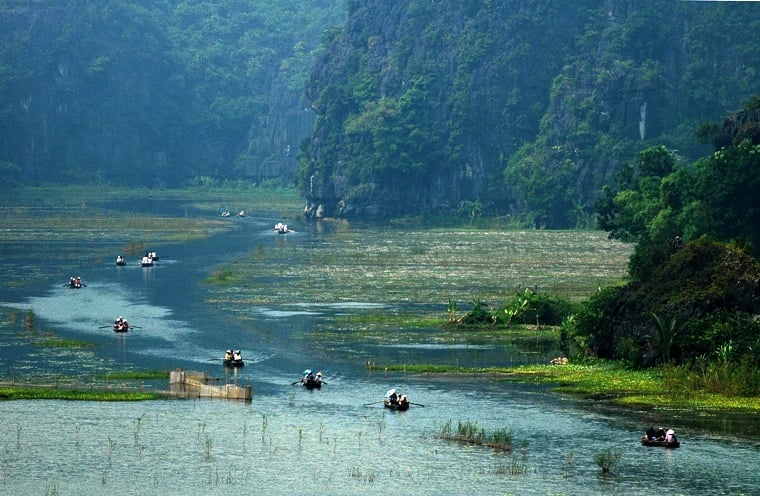
Standing atop Múa Peak, the panorama of Tam Cốc – Bích Động unfolds like a living watercolor painting. Rivers gently weave through vast rice fields, nestled at the foot of towering limestone karsts, truly embodying the "muse of Tam Cốc." This is the prime vantage point to behold Tam Cốc, especially during the vibrant golden ripe rice season or the lush green season, offering breathtaking moments and unforgettable photo opportunities.
Beyond its natural scenery, Múa Cave is imbued with deep cultural and spiritual significance. On the mountaintop stands a compact yet grand Buddhist stupa, often called the "insta-famous tower," attracting visitors for worship and photography. Its architecture reflects distinct East Asian influences, with a square base symbolizing earth, a round body for water, pointed cones for fire, an umbrella for wind, and the apex for space. Along the ascent, statues of Nghê (a dragon's offspring) and eagles stand guard, reflecting Vietnamese religious beliefs and spiritual culture, adding a mysterious and ancient charm to the climbing path.
The name "Hang Múa" (Dancing Cave) traces back to ancient legends, when King Trần Thái Tông would visit the Hoa Lư region, establish Thái Vi Temple, and enjoy performances by beauties and concubines dancing and singing here. Múa Cave is not only a witness to imperial tales but also holds a heroic piece of history, having served as a mobile hospital during wartime to treat wounded soldiers. These stories weave a rich cultural tapestry, making every facet of Múa Cave more vibrant and meaningful.
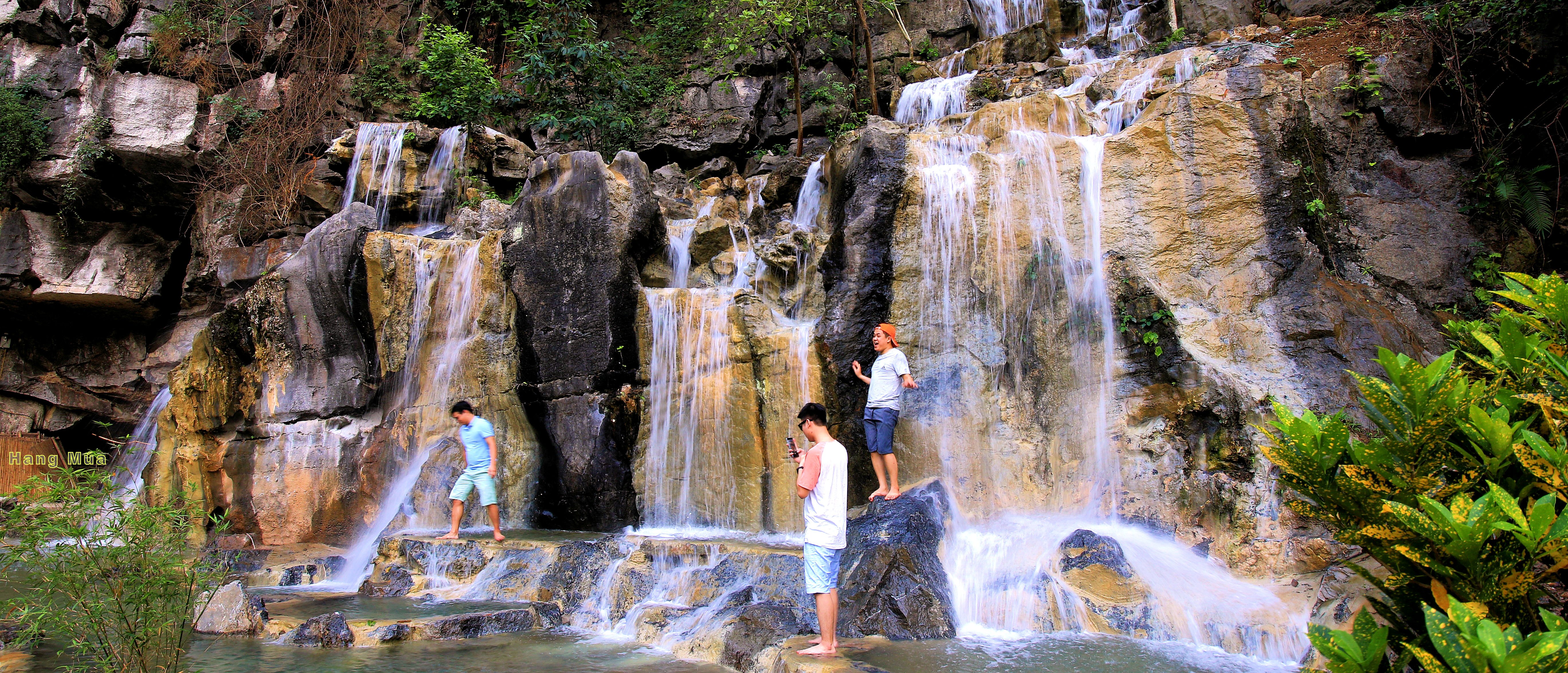
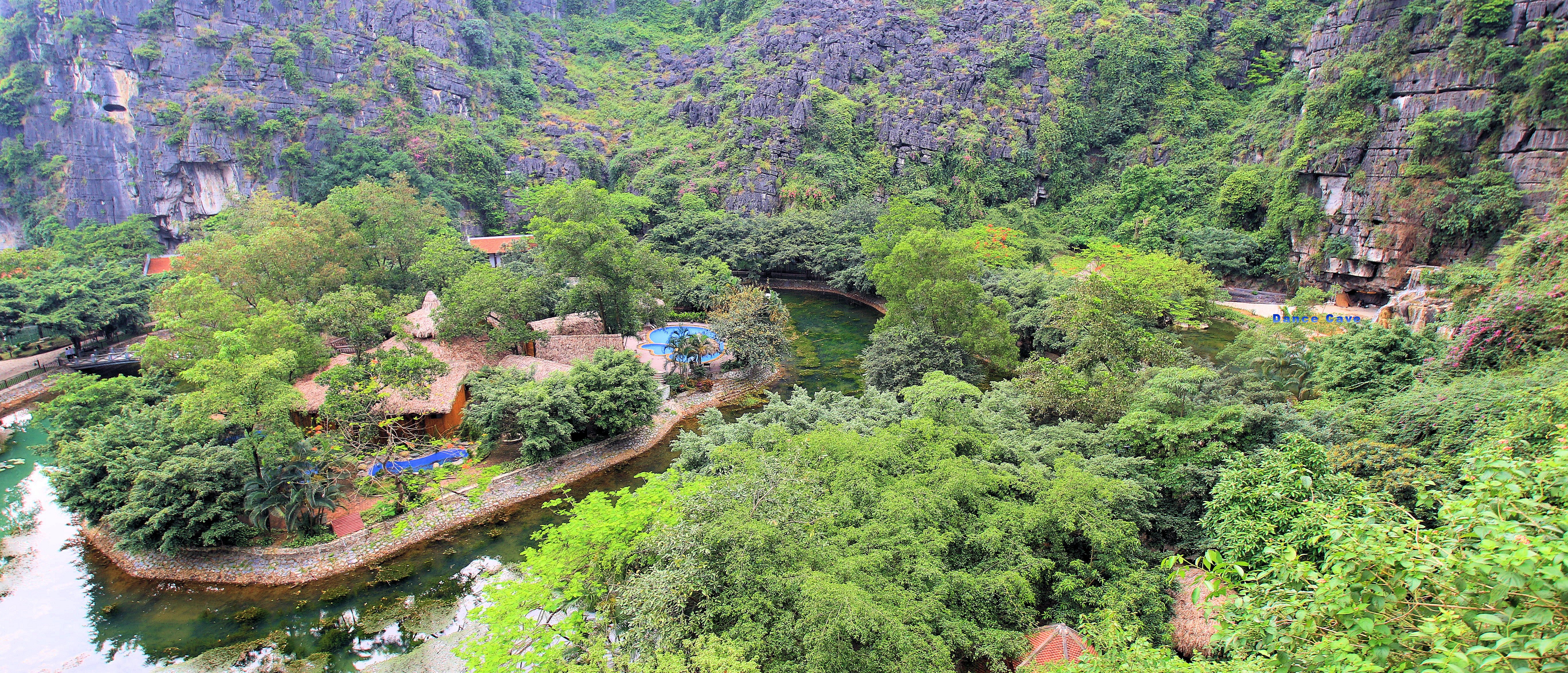
Beyond the magnificent peak, the Múa Cave tourist area offers a diverse complex for visitors. Mysterious caves delve deep into the mountain, awaiting exploration. At the base, guests can stroll through vibrant terraced flower gardens, admire elegant water pavilions amidst lakes, or relax in unique tree houses. The combination of mountain climbing, cave exploration, and relaxation in a lush ecological setting creates a comprehensive and invigorating experience.
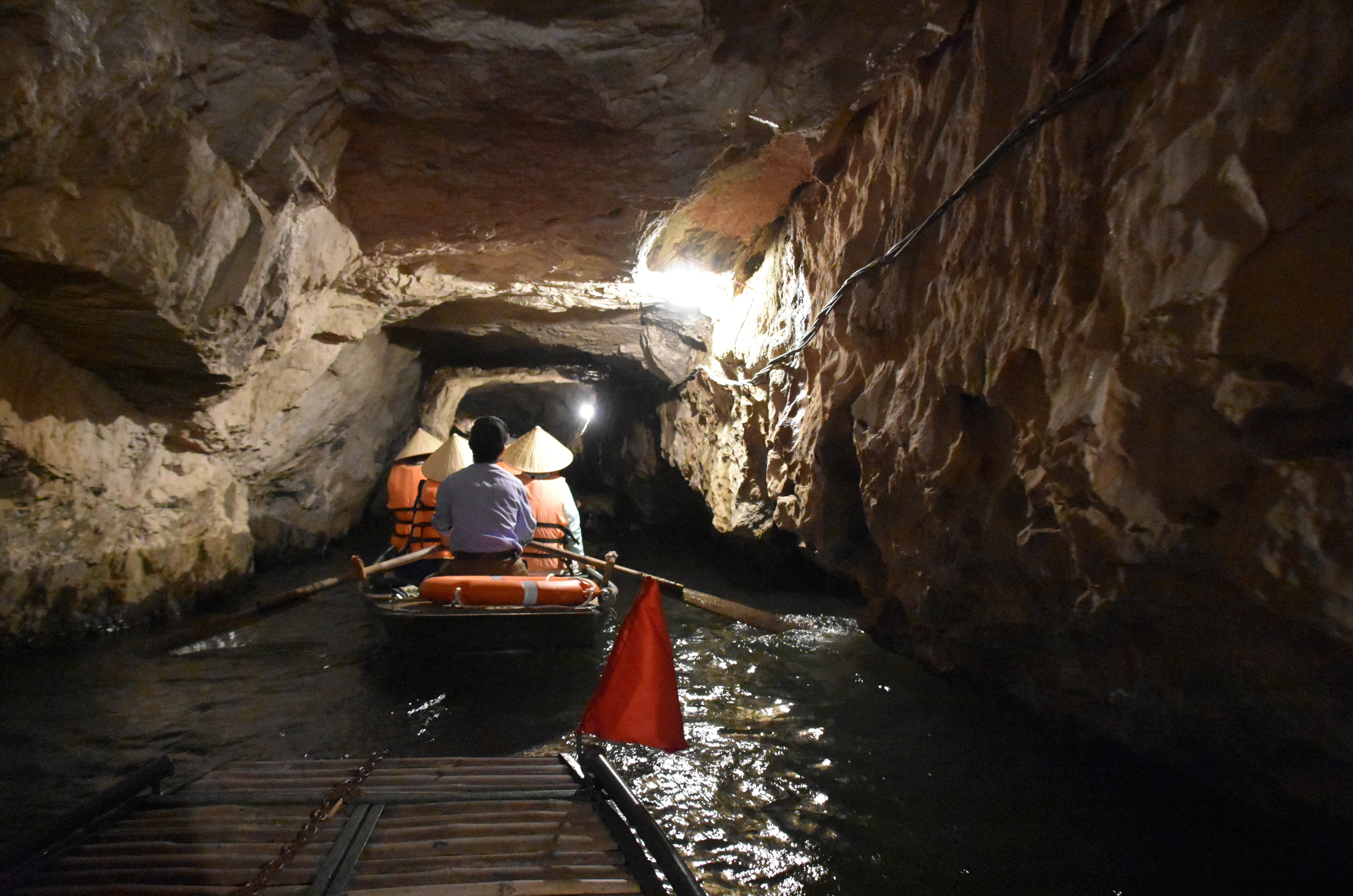
It's no wonder Múa Cave consistently appears in newspapers and on social media, hailed as one of Ninh Bình's most beautiful check-in spots, even surpassing Tràng An and Bái Đính Pagoda on TripAdvisor in 2018. With its development into Múa Cave Ecolodge, the site now offers comprehensive services including accommodation, restaurants, and dedicated sightseeing areas. The blend of pristine beauty and modern amenities has transformed Múa Cave into a "charming queen" of Tràng An, an unmissable destination for anyone seeking to discover the true beauty of Vietnam.
Essential Information
Best Time
From May to August is the ideal time to witness the golden ripe rice fields or the vast green paddies of Tam Cốc from Múa Peak.
Spring (February - April) offers pleasant, cool weather perfect for climbing and exploration.
Avoid the rainy season (September - November) for the best experience.
Spring (February - April) offers pleasant, cool weather perfect for climbing and exploration.
Avoid the rainy season (September - November) for the best experience.
Transportation
From Hanoi: Travel by bus, train, or private car approximately 100km to Ninh Bình, then continue by taxi or motorbike for about 10km southwest of Hoa Lư city center.
From Hoa Lư city center: Approximately 10km, easily accessible by motorbike or taxi.
Many tourists opt for motorbikes to conveniently explore nearby attractions.
From Hoa Lư city center: Approximately 10km, easily accessible by motorbike or taxi.
Many tourists opt for motorbikes to conveniently explore nearby attractions.
Tips
Wear comfortable sports shoes for an easier ascent of the nearly 500 stone steps.
Carry water and light snacks to stay hydrated and energized during the climb.
Ensure your camera or phone is fully charged to capture stunning moments, especially at the "insta-famous tower" and from the mountain peak.
Visit in the early morning or late afternoon to avoid the midday sun and enjoy fresh air, sunrise, or sunset views.
Combine your trip with nearby attractions such as Tràng An, Tam Cốc – Bích Động, Thung Nham, and Vân Long Wetland Reserve for a comprehensive Ninh Bình experience.
Carry water and light snacks to stay hydrated and energized during the climb.
Ensure your camera or phone is fully charged to capture stunning moments, especially at the "insta-famous tower" and from the mountain peak.
Visit in the early morning or late afternoon to avoid the midday sun and enjoy fresh air, sunrise, or sunset views.
Combine your trip with nearby attractions such as Tràng An, Tam Cốc – Bích Động, Thung Nham, and Vân Long Wetland Reserve for a comprehensive Ninh Bình experience.
Specialties



Essential Information
Best Time
From May to August is the ideal time to witness the golden ripe rice fields or the vast green paddies of Tam Cốc from Múa Peak.
Spring (February - April) offers pleasant, cool weather perfect for climbing and exploration.
Avoid the rainy season (September - November) for the best experience.
Spring (February - April) offers pleasant, cool weather perfect for climbing and exploration.
Avoid the rainy season (September - November) for the best experience.
Transportation
From Hanoi: Travel by bus, train, or private car approximately 100km to Ninh Bình, then continue by taxi or motorbike for about 10km southwest of Hoa Lư city center.
From Hoa Lư city center: Approximately 10km, easily accessible by motorbike or taxi.
Many tourists opt for motorbikes to conveniently explore nearby attractions.
From Hoa Lư city center: Approximately 10km, easily accessible by motorbike or taxi.
Many tourists opt for motorbikes to conveniently explore nearby attractions.
Tips
Wear comfortable sports shoes for an easier ascent of the nearly 500 stone steps.
Carry water and light snacks to stay hydrated and energized during the climb.
Ensure your camera or phone is fully charged to capture stunning moments, especially at the "insta-famous tower" and from the mountain peak.
Visit in the early morning or late afternoon to avoid the midday sun and enjoy fresh air, sunrise, or sunset views.
Combine your trip with nearby attractions such as Tràng An, Tam Cốc – Bích Động, Thung Nham, and Vân Long Wetland Reserve for a comprehensive Ninh Bình experience.
Carry water and light snacks to stay hydrated and energized during the climb.
Ensure your camera or phone is fully charged to capture stunning moments, especially at the "insta-famous tower" and from the mountain peak.
Visit in the early morning or late afternoon to avoid the midday sun and enjoy fresh air, sunrise, or sunset views.
Combine your trip with nearby attractions such as Tràng An, Tam Cốc – Bích Động, Thung Nham, and Vân Long Wetland Reserve for a comprehensive Ninh Bình experience.